The outcome
Move from a raw file to a useful, checked deliverable.
Step by step
A workflow you can repeat.
- 01
Upload the original file and explain what it is, who produced it, and what decision you need to make.
- 02
Ask ChatGPT to describe the file structure and any obvious gaps before it analyzes the content.
- 03
Request findings in a table with a source location, confidence level, and unanswered question for every important claim.
- 04
Open the cited pages, rows, or passages yourself and correct any mismatch before using the result.
- 05
Ask for the final output in the exact format you need: memo, checklist, email, or action plan.
Interface reference
Connect the workflow to the product.
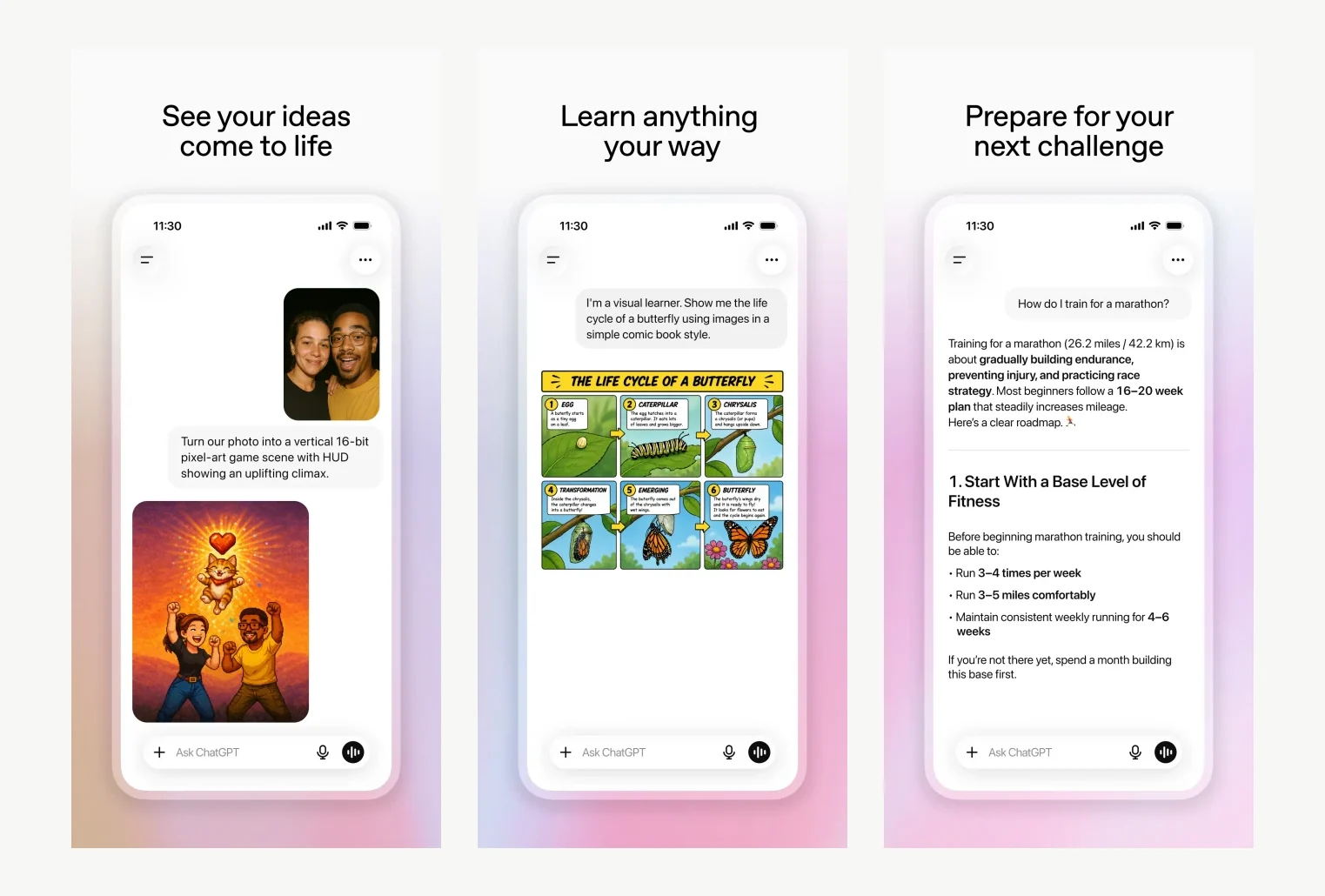
ChatGPT on iPhone, showing three common ways to move from a prompt to a useful visual or structured result.
Interface reference · Official ChatGPT App Store listing ↗ · Captured August 2, 2026Working standard
What good use looks like.
- Keep the original file attached for follow-up questions.
- Separate extraction from interpretation.
- Use a fresh chat when the task changes materially.
Official references