What should a landscaping website include?
A page for every service you want to sell, a gallery of finished projects, the area you cover, and a way to ask for a quote from every page. Someone looking for paving or a new lawn searches for exactly that, so a page that names the job and shows it done wins over a single “our services” list.
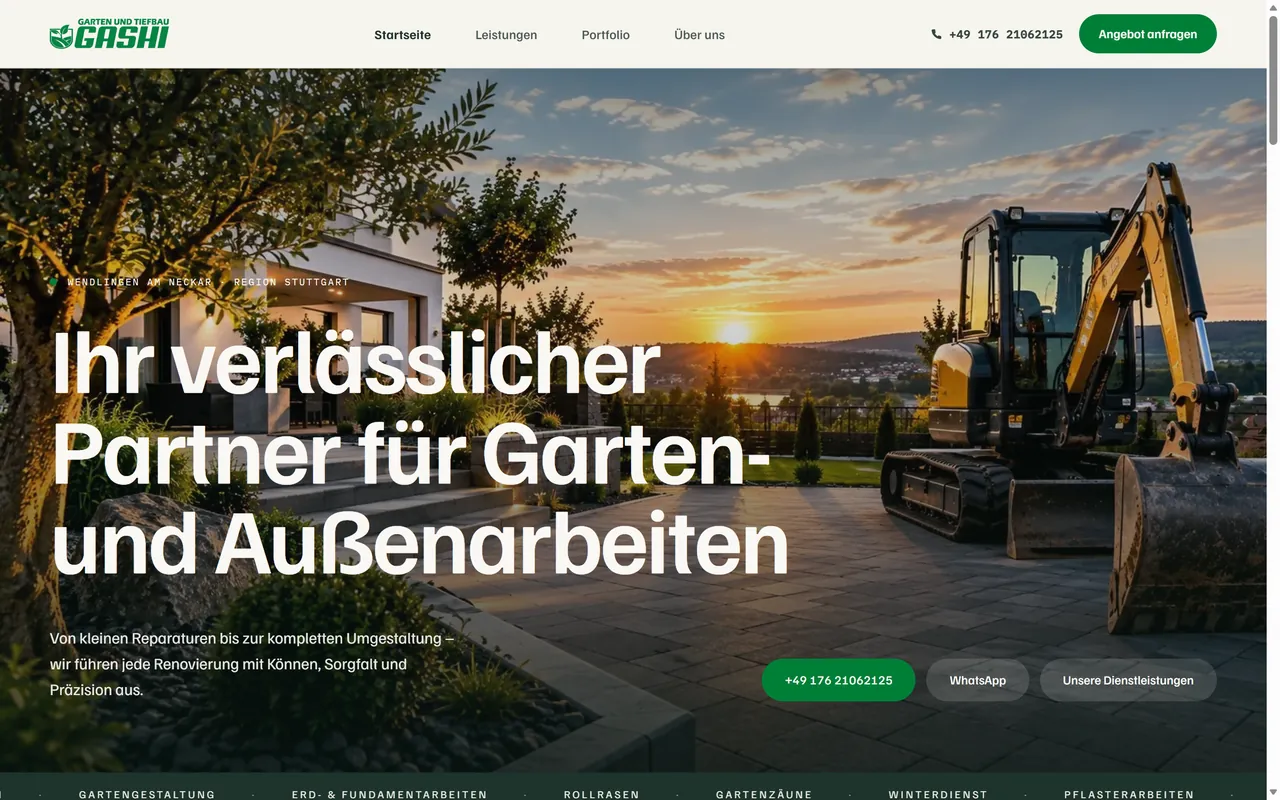
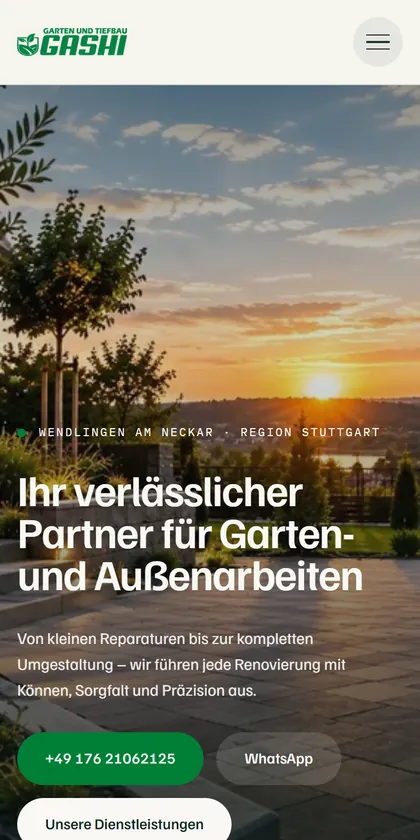
Say where you work. A line such as “Wendlingen am Neckar and the Stuttgart region”, which opens the Gashi Garten und Tiefbau homepage, tells a customer at once whether to keep reading.
How should a landscaper show their work online?
With your own photos of finished jobs, grouped by the kind of work, prepared so they load fast on mobile data. Stock photos of perfect gardens convince nobody; a terrace you actually laid does.
Photo quality and file size are separate problems. Large originals straight from a phone can make a gallery slow to open on a building site’s signal, so every image should be resized and compressed before it goes live, as we do for the Gashi portfolio.
How should customers ask for a quote or an appointment?
Offer a short form for people who plan ahead, and call and WhatsApp buttons for people who would rather talk. Then make sure no request gets lost once it arrives.
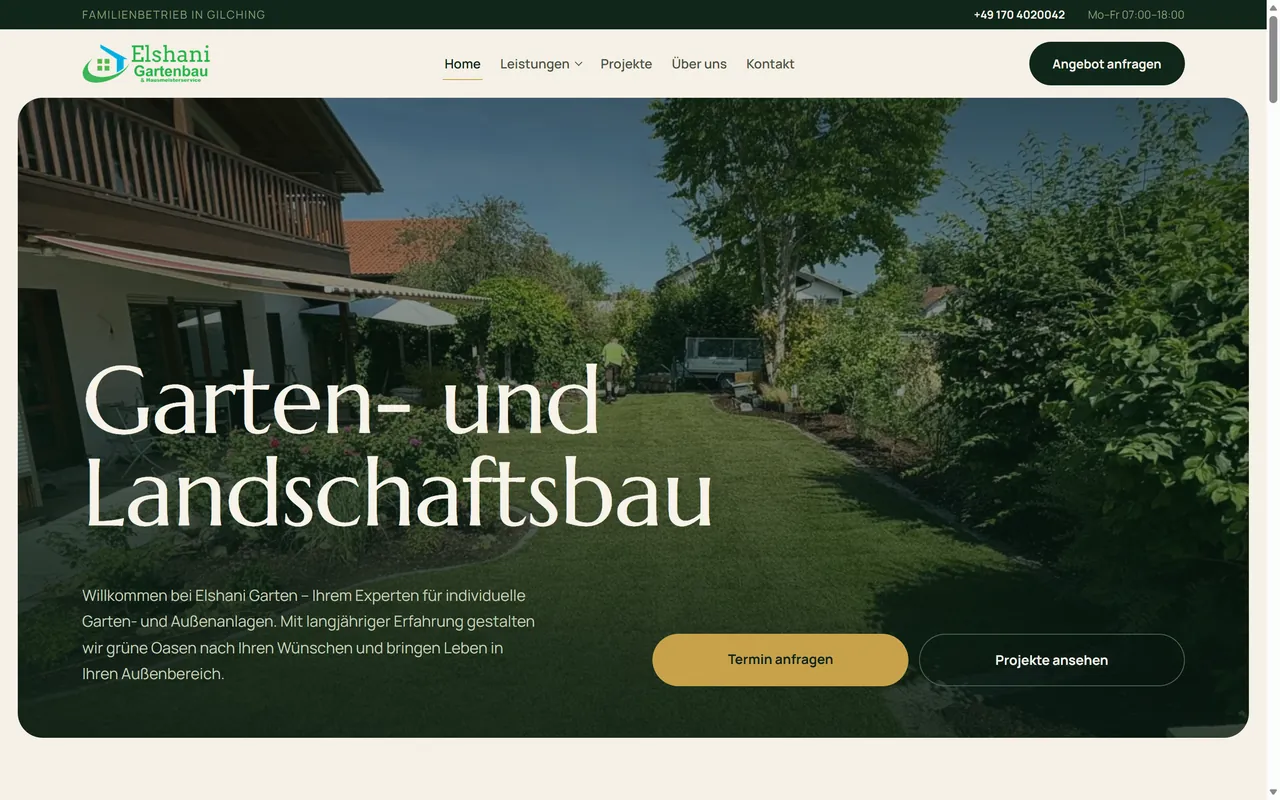
For Elshani Garten we built an appointment console behind the site. Each request lands with the customer’s preferred dates, gets a status, notes and a history, and the team accepts or declines it from one panel, which emails the customer the decision. Requests can be exported as a spreadsheet at any time.
How do landscapers get found on Google and AI assistants?
Through a Google Business Profile that matches the website, a page for each service in plain text, and consistent name, address and phone details everywhere. AI assistants such as ChatGPT and Gemini recommend businesses they can read and check against other sources, so the same details on the site, the profile and directories matter.
Structured data helps search engines read the business, but only with types Google accepts. One unsupported type can make the validator reject the whole business description, so check it in Google’s Rich Results Test after every change.
How fast should a landscaping website be?
Fast enough that its main content appears in about a second, even on a phone, with nothing jumping as it loads. Google’s limit for a good experience is 2.5 seconds for the main content and 0.1 for layout shift.
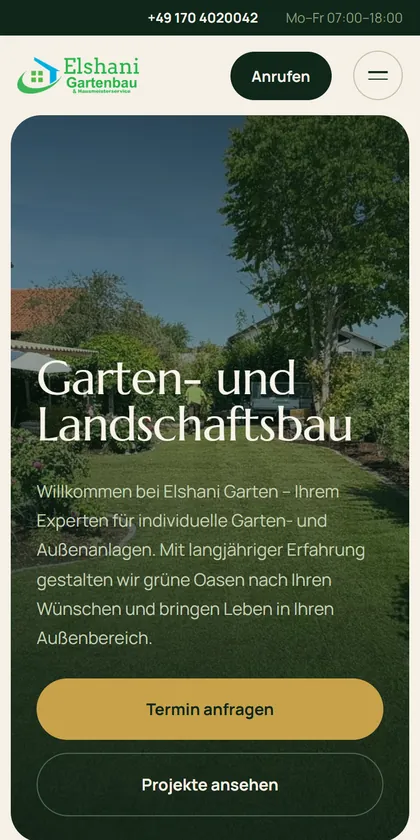
In Lighthouse’s desktop test, the Elshani Garten homepage shows its main content in 0.73 seconds and Gashi’s in 1.06 seconds, both with zero layout shift, despite full-width garden photography.
Does a landscaping website need a cookie banner?
Only if it uses optional cookies or loads third-party content. Elshani Garten’s site sets no tracking cookies at all, and stops spam with a self-hosted check instead of a third-party captcha. Gashi’s site shows a consent banner because its map loads from an outside service, and the map only loads once the visitor agrees.