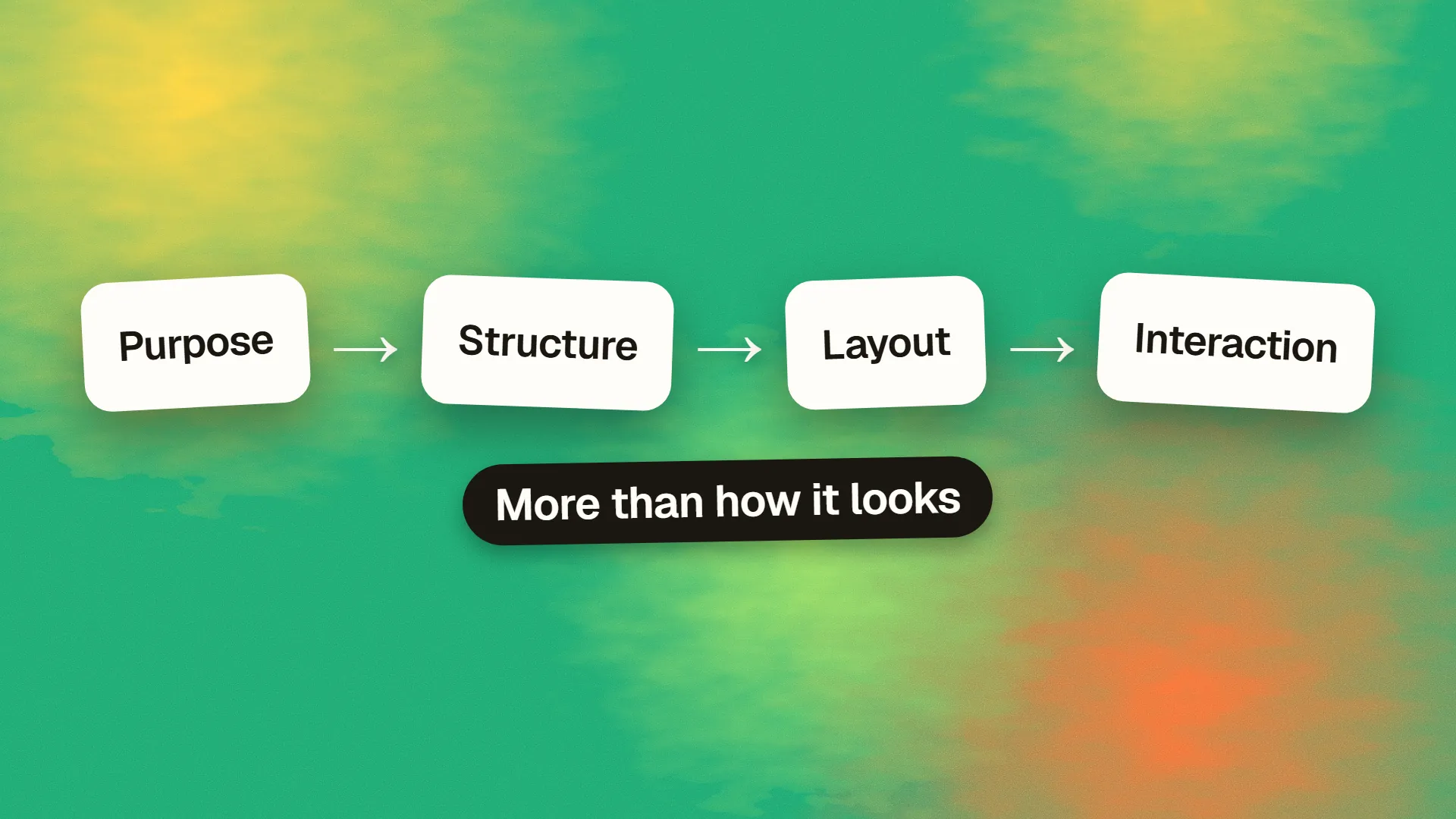
In short
A web designer plans and designs websites: understanding what the site is for and who uses it, organising the content and navigation, designing the layout, typography, colour and imagery for every screen size, designing the interactive states and flows, and producing a specification a developer can build from or building it themselves on a platform. They do not usually write application code, create the brand identity, or write the content, though many overlap into one of those. The role has absorbed usability and interaction design and is now often titled UI/UX or product designer.
The job, stage by stage
Understanding. Before any design, a designer establishes what the site is for, who will use it, what those people need to do, what the business needs them to do, and what constraints apply: brand, platform, budget, content that exists. This comes from a brief, from conversations, from looking at the current site's data, and from research where the project affords it.
Structure. Deciding what pages exist, how they are grouped, what the navigation says, and what goes on each page in what order. This is information architecture, and it is settled before anything is drawn, usually as a sitemap and rough wireframes.
Visual design. Applying the brand, or a chosen direction, to the structure: typography, colour, spacing, imagery, the treatment of components. Designed at real sizes for phone and desktop, as mockups in a tool such as Figma, with real content rather than placeholder text, since content length changes layout.
Interaction. What happens when someone hovers, taps, types, scrolls, submits, gets an error. The states of every component, the transitions, the forms and their validation. This is the part that separates a web designer from a graphic designer, and the part most often left to the developer to guess.
Responsiveness. Making the design work at every width, not just the two mockup sizes, and deciding how each element adapts.
Handoff or build. Either a specification the developer builds from, with components, states, spacing and assets documented and the design files organised for inspection; or, on platforms such as Webflow, Squarespace or WordPress with a builder, constructing the site directly. Many web designers do both, and which one a project needs is a question to settle when hiring.
Review and iteration. Checking the built site against the design on real devices, and adjusting where the build revealed a problem the mockup hid.
What they do not usually do
Write application code: that is a developer, and the distinction matters when hiring. Create the brand identity, logo and guidelines: that is a brand or graphic designer, though many web designers can do a competent job of it. Write the copy: that is a copywriter or the client, and a designer working with placeholder text produces a design that breaks when the words arrive. Run SEO, analytics or marketing, though a good designer builds with them in mind. Some designers cover several of these; the ones who claim all of them usually do one of them well.
How the role changed
Twenty years ago a web designer produced a Photoshop picture of a homepage and a developer sliced it into HTML. The work is now closer to product design: responsive layouts that adapt continuously, component systems rather than page pictures, interaction states as first-class deliverables, usability research and testing, accessibility as a requirement, and collaboration in shared tools where developers inspect the design directly. The titles UI designer, UX designer, UI/UX designer and product designer describe the same expansion from different angles, and the UI versus UX distinction is the useful one: the visual layer and the usability layer, both of which a modern web designer covers.
The tools
Figma for design, prototyping and handoff, almost universally. A whiteboarding tool for flows and structure. Browser developer tools for checking builds. Increasingly, enough HTML and CSS to prototype and to specify precisely, and familiarity with the platform the site will be built on. Analytics and testing tools where research is part of the job.
What a designer needs from a client
A clear statement of what the site is for and who it serves. The content, or at least a realistic sample and a plan for the rest. The brand assets and any guidelines. Access to the current site's analytics. Decisions made by one person who can approve. Honest feedback about what is wrong, not instructions for how to fix it. And time to iterate: a design that is approved on the first round was either very well briefed or not looked at closely.
What to expect back
A structure you agreed before it was styled. Mockups of the key pages at phone and desktop sizes with your content in them. The interactive states, not just the resting state. A clickable prototype of the main flows. A component library or style guide so the site stays consistent as it grows. Design files or a specification a developer can build from without guessing, or the built site itself. And a review of the build against the design.
If what you receive is a picture of the homepage, you have hired a graphic designer for a web design job, and the developer will be doing the rest of the design without you. If you are unsure what a project needs from its designer, book a call; we run design and development together precisely because the seam between them is where sites go wrong.
Common questions
What is the difference between a web designer and a web developer?
A web designer decides what the site says, how it is organised, how it looks at every screen size and how it behaves, producing a buildable specification or building it on a platform. A web developer writes the code that makes the site work in browsers. Some people do both; on most projects they are different roles and the design is the developer's specification.
Do web designers need to know how to code?
Not necessarily, but most benefit from enough HTML and CSS to understand what is buildable, to prototype, and to specify precisely. Designers working on platforms such as Webflow build sites directly without traditional coding. Designers producing specifications for developers need to understand responsive behaviour and component states, which coding knowledge helps with.
What does a web designer deliver?
An agreed site structure and navigation, wireframes, mockups of key pages at phone and desktop sizes with real content, the interactive states of components, a clickable prototype of main flows, a component library or style guide, and design files or a specification a developer can build from, or the built site on a platform. Plus a review of the build against the design.
Is a web designer the same as a UI/UX designer?
Largely, in modern usage. The web designer role has expanded to cover both the visual layer and the usability layer, including research, flows and interaction states, which is what UI/UX or product designer describes. A designer who only produces visuals without considering behaviour and structure is doing a narrower job than the title now implies.
What should I give a web designer before they start?
A clear statement of the site's purpose and audience, the content or a realistic sample with a plan for the rest, brand assets and guidelines, access to the current site's analytics, a single decision-maker, and honest feedback about problems rather than prescribed fixes. Designs built on placeholder text and unclear goals are redesigned when the real content and goals arrive.