In short
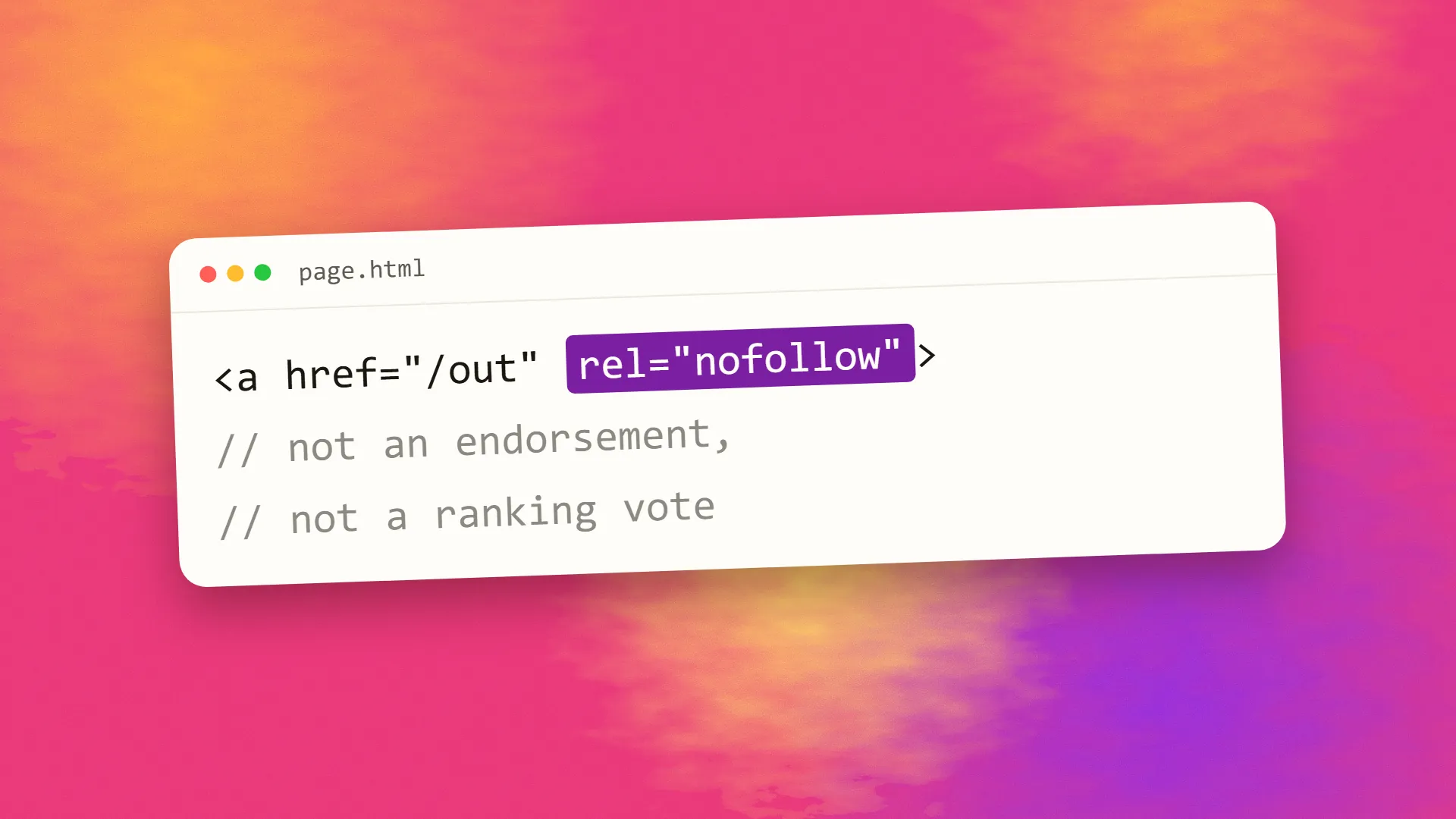
A nofollow link carries the attribute rel="nofollow", which tells search engines that the linking site does not endorse the destination and does not want the link counted as a ranking vote. Google introduced it in 2005 to combat comment spam and paid links; since 2019 it treats nofollow, and the newer rel="sponsored" for paid links and rel="ugc" for user-generated content, as hints rather than directives, meaning it may still use them for crawling and ranking in some cases. Use sponsored for anything paid, ugc for user content, and nofollow for links you cannot vouch for; never use it on your own internal links.
The origin
By 2005 blog comments were full of spam links planted to pass ranking signals. Google, Yahoo and Microsoft agreed on an HTML attribute, rel="nofollow", that a site could add to links it did not control or endorse, telling search engines not to count them as votes. Blog platforms applied it to comment links by default, and the incentive to spam comments for rankings fell. Google then extended the expectation to paid links: advertising and sponsorships that pass signals violate its policies, and nofollow was the way to disclose them.
For fourteen years the attribute was a directive: Google ignored nofollowed links for ranking and, in practice, for crawling.
The 2019 change
In September 2019 Google introduced two more attributes and changed the semantics of all three. rel="sponsored" marks links that are paid, advertising or sponsorship. rel="ugc" marks user-generated content such as comments and forum posts. rel="nofollow" remains for links where the site does not want to imply endorsement and neither of the others applies. And from March 2020, all three became hints: Google may consider a nofollowed link for crawling, indexing and ranking where it judges that appropriate, rather than ignoring it outright.
The stated reason was that so many links carry nofollow, including many from legitimate sources such as Wikipedia and major publishers, that ignoring them all threw away useful information about the web. The practical effect for most sites has been small: nofollowed links are still mostly not counted, but they are no longer guaranteed to be discounted, and Google has the option.
When to use each
sponsored: any link that was paid for in money, goods or services: adverts, affiliate links, sponsored posts, paid placements. Google says using nofollow for these is still acceptable but sponsored is preferred; using neither on a paid link violates the link spam policy for both parties.
ugc: links in content contributed by users: comments, forum posts, profile pages, reviews. Trusted contributors can be exempted.
nofollow: links you want to disclaim without either reason applying: a link to a site you are criticising, a link required by a partnership you do not want read as an endorsement, a link in a widget. Also acceptable as a catch-all where the platform offers nothing more specific.
Attributes can be combined, rel="nofollow sponsored", for older crawlers that recognise only nofollow.
| Attribute | Use it for |
|---|---|
rel="sponsored" | Anything paid for, in money, goods or services |
rel="ugc" | Links in content from users: comments, forums |
rel="nofollow" | Links you want to disclaim for any other reason |
Do nofollow links still have value?
Yes, for reasons other than passing ranking signals. A nofollowed link from a busy page sends visitors, who may buy, subscribe or link from their own sites. It gets a new site discovered and crawled. It is part of a natural link profile, which for any real site contains a large share of nofollowed links from social platforms, directories, forums and comments; a profile with none looks engineered. And since 2020, it may in some cases be counted, though nobody outside Google knows when.
What nofollow links do not do is substitute for editorially given followed links, which remain the links that move rankings. A campaign to acquire nofollowed links for ranking purposes is a campaign to acquire something Google has said it mostly ignores.
The internal-link mistake
Some sites nofollow their own internal links to pages they consider unimportant, such as login, privacy or cart pages, in the belief that this sculpts how ranking signals flow. Google has said for years that this does not work as intended and simply wastes the signal the link would have passed. Internal links should never carry nofollow; pages that should not rank get noindex, and pages that should not be crawled get robots rules. The internal linking pass on any site should remove these.
A note on link-building offers
A good share of the link offers that arrive by email promise followed links from sites that, on inspection, mark everything nofollow, or promise nofollow links as if they were a ranking asset. Neither is worth paying for. A link is worth having when the page sends real visitors or when a real editor chose to make it; the attribute is a detail of how it will be read, not a measure of what it is worth.
Checking a site
A crawler reports every link's rel attributes. Look for nofollow on internal links, which should be removed; for paid or affiliate links without sponsored or nofollow, which are a policy risk; and for user-generated areas without ugc. On the inbound side, a backlink tool shows the follow and nofollow split, which for a natural profile is mixed.
Nofollow is a small attribute with a long history, and the rules are now simple: label paid links as sponsored, user links as ugc, disclaimed links as nofollow, and your own links as nothing at all. If a site of yours has been sculpting internal links or carrying undisclosed paid ones, book a call; both are quick to fix.
Common questions
Do nofollow links help SEO?
Not as ranking votes in the way followed links do, since Google mostly discounts them, though since 2020 it treats nofollow as a hint and may count some. They still send visitors, help new sites get discovered and crawled, and form part of the natural link profile every real site has. They are worth having for traffic, not worth pursuing for rankings.
What is the difference between nofollow, sponsored and ugc?
All three tell search engines not to treat a link as an endorsement. Sponsored is for paid links including adverts, affiliates and sponsorships; ugc is for links in user-generated content such as comments and forums; nofollow is for any other link the site wants to disclaim. Google treats all three as hints rather than strict directives.
Should affiliate links be nofollow?
They should be marked rel='sponsored', which Google prefers for any paid or commercial link; nofollow remains acceptable. Leaving affiliate or paid links unmarked so they pass ranking signals violates Google's link spam policy for both the linking and the linked site.
Should I nofollow internal links?
No. Nofollowing your own links to login, privacy or cart pages does not redirect ranking signals to other pages; it discards them. Google has said this for years. Use noindex on pages that should not appear in search and robots rules on paths that should not be crawled, and leave internal links plain.
How do I add nofollow to a link?
Add the rel attribute to the anchor tag: <a href='…' rel='nofollow'>, or rel='sponsored' for paid links and rel='ugc' for user content, combining them with a space if needed. Most CMS editors offer a checkbox for it, and comment and forum systems apply ugc automatically.