In short
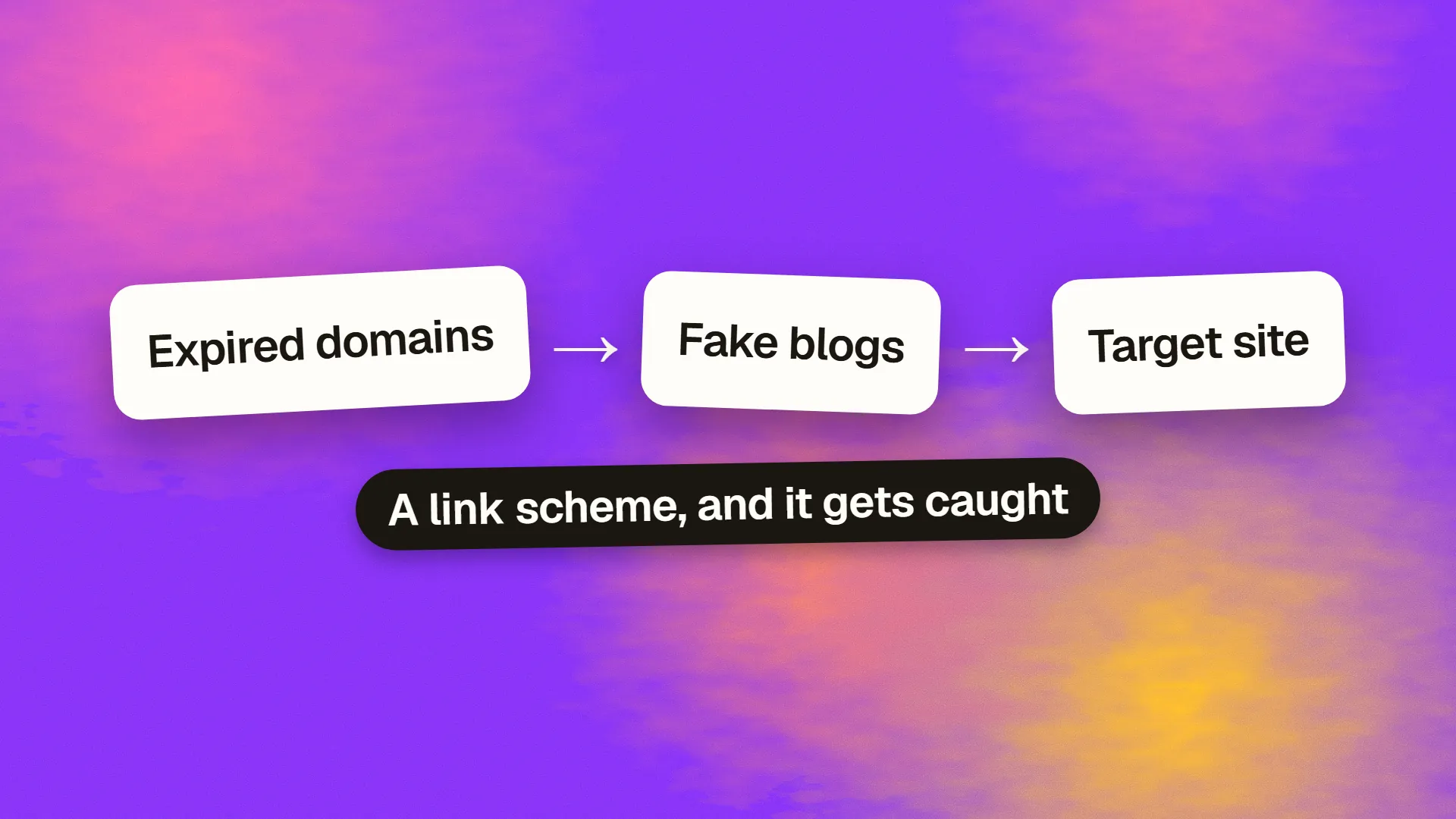
A private blog network is a group of websites, typically built on expired domains with existing links, controlled by one owner and used to publish content whose purpose is to link to a target site and manipulate its rankings. It is a link scheme under Google's spam policies. Networks are detected through shared hosting, ownership, templates, content patterns and link behaviour, and when caught the target site's links are devalued or the site receives a manual action, sometimes years after the links were placed. The rankings they buy are borrowed against a penalty; sites that inherited a PBN from a previous agency should audit and disavow.
The mechanism
Links from other sites are a ranking signal. A private blog network manufactures them: someone buys or builds a set of sites, publishes content on each, and links from them to the site they want to rank, or rents the links to others. The "private" part is that the network's ownership is hidden, so the links appear to come from independent sites choosing to cite the target.
The raw material is usually expired domains with existing backlink profiles, bought at auction and rebuilt with generic content in the target's niche, so that each network site carries some inherited authority to pass along. A network of twenty such sites, each linking to a client, can move rankings for a while. That is why the market exists and why sellers can show results.
How they are hidden, and why it fails
Operators try to remove the footprints that reveal common ownership: different hosts and IP ranges, different registrars and privacy-protected WHOIS, different themes, staggered publishing, no cross-linking between network sites, no shared analytics or tracking codes. Each precaution addresses one signal. Google's systems look at many at once.
The footprints that persist: content that exists to carry links, with no audience, no engagement and no reason to exist; sites that link out to commercial targets in patterns unrelated to their topic; expired domains whose content changed subject entirely when re-registered; identical or templated site structures; links appearing on many network sites to the same targets within similar periods; and, increasingly, the machine-learned pattern of what a real site's link profile looks like versus a manufactured one. SpamBrain, Google's spam detection, is trained on exactly this, and Google has said it can identify and neutralise link networks at scale.
What happens when they are caught
Algorithmic devaluation. The most common outcome since 2016: the network's links are simply not counted, and the target site loses whatever ranking they were providing, usually around a spam update, with no notification. The site drops to where its genuine links put it, which for a site that relied on the network can be nowhere.
Manual action. A reviewer identifies unnatural links to the site and applies a penalty, notified in Search Console, affecting either specific pages or the whole site. Lifting it requires removing or disavowing the links and a reconsideration request, and the process takes weeks to months.
Network takedown. Google deindexes the network sites themselves, which takes every client's links with them at once.
The consequences often arrive long after the links were placed, when the network is finally detected, which is why a site can rank for two years and then lose everything in a week, with the agency that built the network long gone.
The sellers' pitch, examined
"Our network is undetectable." Every network says this until it is detected, and the client bears the penalty, not the seller.
"Everyone in your niche does it." Some do, and the ones who rank on it are the ones who have not been caught yet.
"It is faster than earning links." It is, in the same way that borrowing at a rate you cannot pay is faster than saving.
"We use real sites with real traffic." A site whose purpose is to sell links is a network site whatever its traffic.
The honest comparison is not PBN versus nothing; it is PBN versus links earned from being worth linking to, which are slower, permanent and cannot be penalised.
If a previous agency built one for you
This is the common case: a business hires an agency, rankings improve, the agency leaves, and a year later the site drops or receives a manual action. The audit: pull the backlink profile, look for clusters of low-quality sites in the niche linking with commercial anchors, check their ownership and history, and confirm whether they are network sites. Then disavow the network domains, request removal where possible, and, if there is a manual action, submit a reconsideration request documenting the cleanup. Rankings will fall to their genuine level; that level is the starting point for building the real thing.
The alternative
Publish something worth citing, make it easy to cite, tell the people who would cite it, and be patient. Links earned this way are fewer and slower, and they are the only ones that survive. Every year the gap between manufactured and earned links gets easier for Google to see, and every year the rankings bought with a network get shorter-lived. If you are being pitched one, or suspect you already have one, book a call; the audit is quick and the decision is not difficult.
Common questions
Are PBNs illegal?
Not illegal, but they violate Google's spam policies as a link scheme, and the consequences are search penalties: links devalued, a manual action against the site, or the network deindexed. Selling PBN links may also breach advertising disclosure rules in some jurisdictions when the links are on sites presented as independent.
How does Google detect private blog networks?
Through combinations of footprints: content that exists only to carry links with no audience or engagement, expired domains whose subject changed on re-registration, templated structures, outbound link patterns unrelated to topic, links to the same targets across many sites in similar periods, and machine-learned models of what manufactured link profiles look like. Hiding one signal does not hide the pattern.
What happens if Google catches a PBN linking to my site?
Most often the network's links are silently devalued around a spam update and your rankings fall to what your genuine links support. Sometimes a manual action for unnatural links is applied, notified in Search Console, requiring cleanup, disavowal and a reconsideration request. Sometimes the network itself is deindexed, removing every link at once.
How do I know if my SEO agency used a PBN?
Pull the site's backlink profile and look for groups of low-quality sites in your niche, often on expired domains with generic content and no real audience, linking with commercial anchor text within similar periods. Check their ownership, history in the Wayback Machine and whether they link to other clients. Sudden ranking gains during the engagement followed by drops after it are the usual pattern.
Can a site recover from PBN links?
Yes. Identify the network domains, disavow them, request removal where possible, and if there is a manual action, submit a reconsideration request documenting the cleanup. Rankings settle to the level the genuine links support, which is the honest starting point. Recovery from a manual action takes weeks to months; from algorithmic devaluation, until the next reassessment.