In short
A UX writer, sometimes titled content designer, writes and structures the language inside digital products: interface labels, button text, error and confirmation messages, onboarding, empty states, notifications, help text and voice guidelines. The work is design rather than marketing: the words are part of how the product functions, and they are tested for whether people understand and complete tasks. Small teams cover it through the designer or a contractor; products with many screens, forms and messages benefit from a dedicated writer, whose impact shows in fewer errors, fewer support tickets and higher completion.
The role
A product is full of words that are not content in the publishing sense: the label on a field, the text on a button, the message when something fails, the sentence that explains a setting, the notification that arrives at 9am. These words decide whether people understand what to do, whether they do it correctly, and how they feel about the product while doing it. A UX writer is responsible for them.
The title varies. Content designer is common in the UK and in larger organisations, emphasising that the work includes structure and information design, not only phrasing. Product writer and UX copywriter appear too. The job is the same: language as part of the interface.
What they produce
Interface copy: navigation labels, headings, field labels, placeholder and help text, button and link text, tooltips, badges.
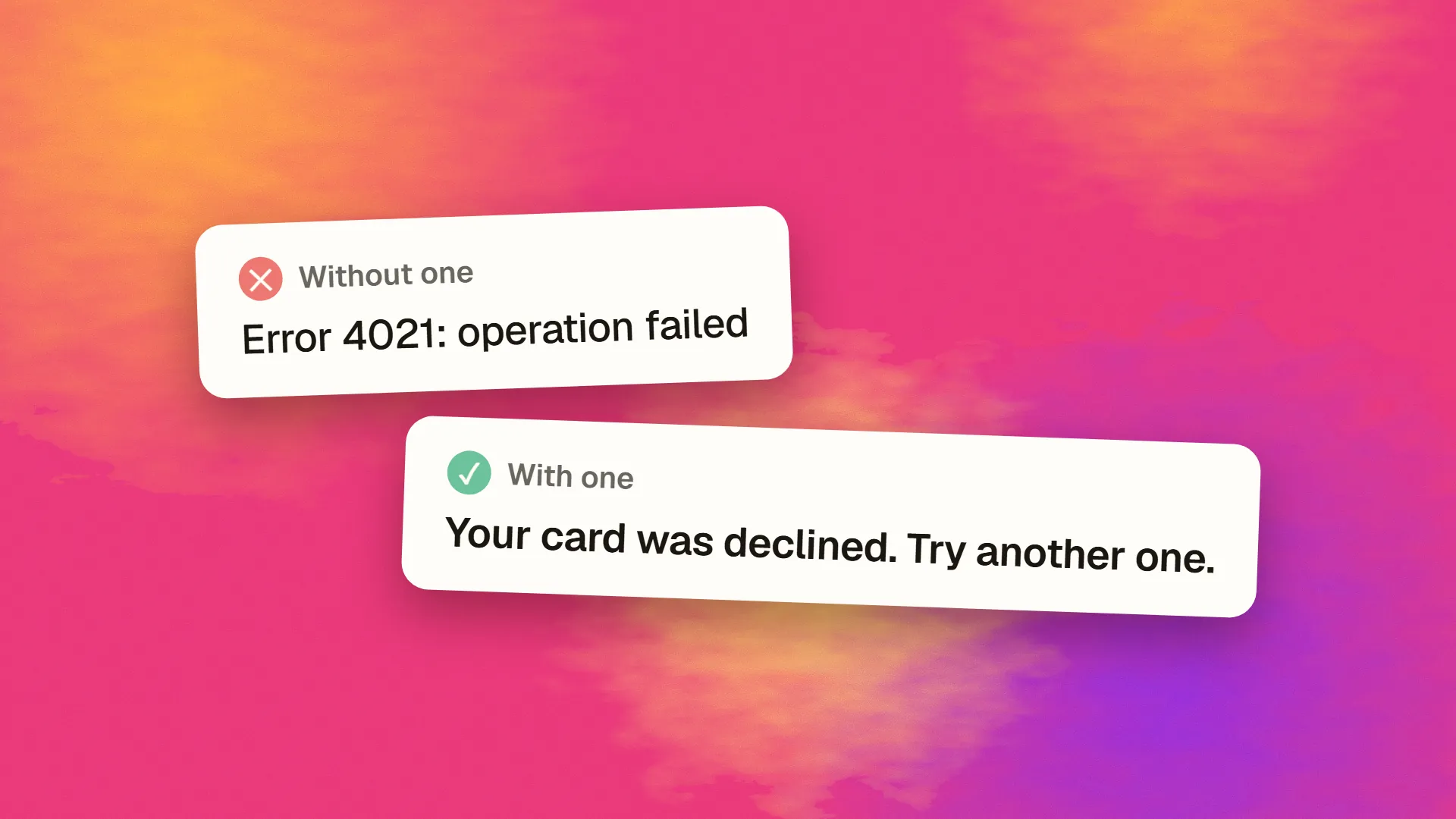
Messages: errors that say what went wrong and what to do; confirmations that say what happened; warnings before destructive actions; loading and success states.
Flows: onboarding sequences, setup wizards, checkout steps, permission requests, each written to move people through with the fewest questions.
Empty states and first-run screens that explain what a space is for and how to fill it.
Notifications and emails the product sends, with their subject lines, timing and tone.
Voice and tone guidelines so that everyone writing in the product sounds like the same product, and a terminology list so the same thing has one name.
Content for the design system: standard wording for common components, patterns for errors and confirmations, rules for capitalisation, punctuation and numbers.
UX writing, copywriting, content design
Copywriting persuades: it sells, positions and promotes, on landing pages, ads and campaigns. Success is conversion and brand perception.
UX writing enables: it helps people use a product. Success is task completion, error rates and comprehension. The tone can be warm, but the job is clarity, and a clever line that slows someone down has failed.
Content design is the broader discipline that includes UX writing and adds structuring information, deciding what content a screen needs at all, and designing the content of whole services. Many content designers do UX writing; not every UX writer does the full content design role.
A marketing site needs a copywriter. A product needs a UX writer. A company with both needs them to agree on voice, which is where brand guidelines meet the interface.
Success: people decide to act
Success: people finish the task
The skills
Writing plainly, obviously, but the rarer skills are elsewhere: understanding how people read interfaces, which is partially and in fragments; knowing the microcopy patterns that reduce errors; designing information order so the important thing is first; writing to constraints of space, translation and accessibility; testing words with users and reading the results; working inside design tools and, increasingly, in code and content management systems; and collaborating with designers and developers as a peer rather than a final polish.
How they work
A UX writer joins the design process early, when flows are being sketched, because the words often reveal that a flow has too many steps or an unclear decision, and it is cheaper to find that in a wireframe than in code. They write in the design file alongside the designer, maintain the terminology and voice guidelines, review new screens before build, and contribute to usability testing, where confusion at a label or a message is among the commonest findings. On mature teams they own the content of the design system, so that a new button or error message starts from a standard.
When a team needs one
A product with a handful of screens is covered by a designer who writes carefully and a shared style guide. A product with many forms, flows, states and messages, several teams shipping screens, or a support inbox full of "what does this mean" questions, benefits from a dedicated writer, and the return is measurable in error rates and tickets. In between, a contractor to establish the voice, terminology and patterns, then periodic reviews, is a common and effective arrangement.
The signal that the role is missing: inconsistent terms across screens, error messages that describe the system rather than the fix, buttons that say Submit and OK, onboarding that explains features rather than helping someone do the first thing, and support answering the same clarifying question daily.
What good looks like
The user always knows where they are, what will happen when they act, and what to do when something fails. Terms are consistent. Sentences are short and specific. The tone matches the moment: neutral for routine, warm for success, calm and useful for errors. Nothing is clever at the expense of clear. And it was tested: the words were shown to people, and the people did the thing.
If your product's words were written by whoever was building the screen that day, book a call; a voice, terminology and patterns pass is a bounded piece of work with a lasting effect.
Common questions
What does a UX writer do?
Writes and structures the words inside a digital product: navigation and field labels, button text, error and confirmation messages, onboarding flows, empty states, notifications and help text, plus the voice guidelines and terminology that keep them consistent. The work is tested for whether people understand and complete tasks, and it sits within the design process.
What is the difference between a UX writer and a copywriter?
A copywriter persuades, writing landing pages, ads and campaigns judged by conversion and brand perception. A UX writer enables, writing the interface text that helps people use a product, judged by task completion, error rates and comprehension. Marketing sites need copywriters; products need UX writers; both should share one voice.
Is a UX writer the same as a content designer?
Closely related. Content designer is the broader title, common in the UK and larger organisations, covering UX writing plus the structuring of information, deciding what content a screen needs at all, and designing the content of entire services. Many content designers do UX writing; a UX writer may not cover the whole content design remit.
When should a company hire a UX writer?
When the product has many forms, flows, states and messages, several teams shipping screens, or a support inbox full of clarifying questions. Small products are covered by a careful designer and a style guide; a contractor to set the voice, terminology and patterns, followed by periodic reviews, is a common middle path.
What skills does a UX writer need?
Plain, precise writing; an understanding of how people read interfaces in fragments; knowledge of microcopy patterns that reduce errors; information ordering; writing to space, translation and accessibility constraints; usability testing and reading its results; fluency in design tools and often content systems; and collaboration with designers and developers from the start of a flow.