In short
Anchor text is the visible, clickable text of a hyperlink. Search engines use it as a description of the linked page written by whoever linked, which makes it a relevance signal for the destination. It still matters: descriptive internal anchors help Google and users understand what a page is about, and natural external anchors reinforce it. Since the Penguin updates, a profile dominated by exact-match keyword anchors from external sites is treated as a link-scheme signal rather than a boost. Write anchors that describe the destination as a reader would, and never engineer the external ones.
What it is
In <a href="/insights/what-is-crawl-budget/">what crawl budget is</a>, the anchor text is "what crawl budget is". It is what the reader sees and clicks, and it is the linking author's description of where the link goes.
That second property is why search engines care. A page describes itself in its title and content; anchor text is how other pages describe it. When many pages link to a page with anchors about crawl budget, Google has independent evidence that the page is about crawl budget, which is exactly the kind of corroboration ranking systems value.
The types
Exact match: the anchor is the target keyword. "crawl budget".
Partial match: contains the keyword within a phrase. "a guide to crawl budget for large sites".
Branded: the site or company name. "Troiana".
Naked URL: the address itself. "troiana.net/insights/…".
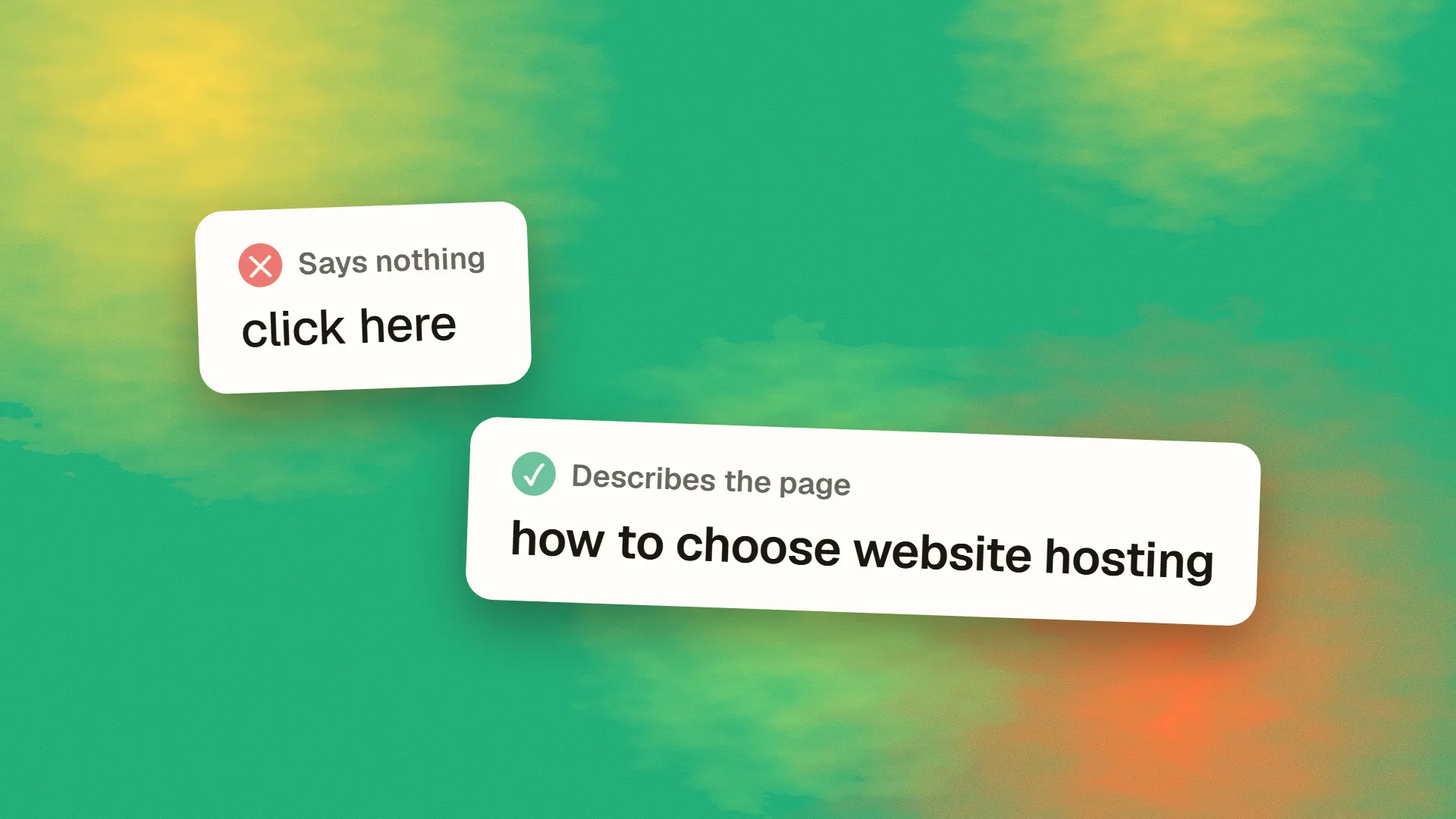
Generic: "click here", "this article", "read more".
Descriptive natural: whatever a writer would naturally say. "an explanation of why Google crawls some sites less".
A real site's inbound links contain a mix, dominated by branded, naked and natural anchors, with exact match a small minority. That mix is the fingerprint of links people chose to make.
| Type | Example |
|---|---|
| Exact match | crawl budget |
| Partial match | a guide to crawl budget |
| Branded | Troiana |
| Naked URL | troiana.net/insights/ |
| Generic | click here |
The history
In the 2000s, anchor text was among the strongest ranking signals, and it was gamed accordingly: sites bought thousands of links with the exact keyword as the anchor, and ranked. Google's Penguin updates from 2012 targeted this directly, and since Penguin became part of the core algorithm in 2016, an unnatural anchor profile, meaning a high proportion of exact-match commercial anchors from external sites, is treated as evidence of manipulation. Such links are devalued, and the pattern can contribute to a manual action for unnatural links.
So external anchor text still carries relevance, but the relationship is no longer linear. Natural anchors help; engineered ones do nothing at best.
Internal anchors, where you have control
Internal links are yours to write, and their anchors are one of the few on-page signals still worth deliberate attention. Descriptive anchors tell Google what each page is about from within the site and tell readers what they will get if they click. They also form the structure Google uses to understand a topic cluster.
The rules: describe the destination in a natural phrase; vary the wording across links to the same page rather than repeating one exact phrase everywhere; never use "click here" or "read more" alone, which describe nothing; keep anchors short enough to read as part of the sentence; and link from relevant context, since the surrounding text also informs the signal. Internal anchors can be more keyword-rich than external ones without risk, because Google expects a site to describe its own pages accurately, but a hundred internal links all reading "cheap web design Prishtina" still reads as engineering.
What a natural external profile looks like
Mostly the brand name and the URL, since that is how people cite a site. Some descriptive phrases. A few exact and partial matches, arising because sometimes the natural description is the keyword. Anchors in many languages if the audience is international. A profile where exact-match commercial anchors are the largest category has been built, and looks built. When earning links, do not specify the anchor; take what the linking site writes.
Accessibility
Screen-reader users often navigate by pulling up a list of a page's links, read out of context. "Click here" appears as a list of identical entries; a descriptive anchor tells them where each link goes. WCAG requires that link purpose be determinable from the link text or its immediate context. The accessibility rule and the SEO rule are the same rule: the anchor should say what the destination is.
Checking a site's anchors
For internal links, a crawler reports every link with its anchor text; sort by anchor and look for generic phrases and for over-repeated exact matches. For external links, a backlink tool shows the anchor distribution; a profile dominated by commercial exact matches is a warning, and the history behind it usually involves a previous agency. In both cases the remedy is editorial for internal links and, for external ones, stopping whatever produced the pattern.
Anchor text is a small part of a page's ranking picture and a large part of how a site's structure is read, which is why it belongs in any internal linking pass. If you would like a site's internal anchors audited and rewritten, book a call; it is one of the more contained improvements available.
Common questions
Does anchor text affect SEO?
Yes. Search engines use anchor text as the linking author's description of the linked page, which makes it a relevance signal for the destination. Descriptive internal anchors help Google and users understand each page; natural external anchors reinforce it. Externally, a profile dominated by exact-match keyword anchors is treated as a link-scheme signal rather than a boost.
What is the best anchor text for internal links?
A natural phrase that describes the destination page, varied across links to the same page, placed in relevant context, and short enough to read as part of the sentence. Avoid 'click here' and 'read more', which describe nothing, and avoid repeating one exact keyword phrase in every link to a page.
Is exact-match anchor text bad?
Not in itself; sometimes the natural description of a page is its keyword. It becomes a problem when exact-match commercial anchors dominate a site's external link profile, which since the Penguin updates is treated as evidence of engineered links and can contribute to a manual action. Internal exact-match anchors are safer but should still be varied.
What does a natural anchor text profile look like?
Mostly the brand name and bare URLs, since that is how people cite sites, plus descriptive phrases in the linking author's own words, with exact and partial keyword matches as a small minority. Anchors arrive in whatever form the linking site chose; specifying them when earning links is what produces an unnatural profile.
Why is 'click here' bad anchor text?
It tells neither search engines nor readers what the destination is. Screen-reader users who navigate by a list of links hear identical entries with no way to distinguish them, which fails accessibility guidelines requiring link purpose to be clear from the text. Describe the destination instead.