In short
Topical authority is the standing a site has, in the judgement of search engines and AI systems, as a comprehensive and reliable source on a particular subject, inferred from how thoroughly it covers the topic's sub-questions, how well those pages interlink, how consistently they are cited, and how expert the authorship appears. Unlike the third-party domain authority score, it is topic-specific: a site can be authoritative on plumbing and irrelevant on tax. It is built by mapping a subject into its questions, answering each on its own page with real expertise, linking the pages into a cluster, and sustaining that over quarters rather than weeks.
What the concept means
Search engines have long ranked pages; increasingly they also judge sites, by subject. A site that has published a hundred good pages on garden design is treated as a likely source for the hundred-and-first garden-design question, even one it has not written about directly, while a general site publishing one garden-design page competes only on that page. That standing, specific to a subject, is topical authority.
It is not domain authority, which is a third-party estimate of link strength for the whole domain. A site can have strong links and no topical depth, or modest links and clear authority on a niche it covers exhaustively. The second increasingly wins for that niche, in Google's results and especially in AI answers, which draw on sources that look like they know the subject.
How it is inferred
Google does not publish a topical authority metric, but its guidance and behaviour point to the signals:
Coverage. The site answers the subject's questions: the basics, the specifics, the comparisons, the edge cases. Semantic understanding lets Google see that fifty pages are about one subject and that they cover it.
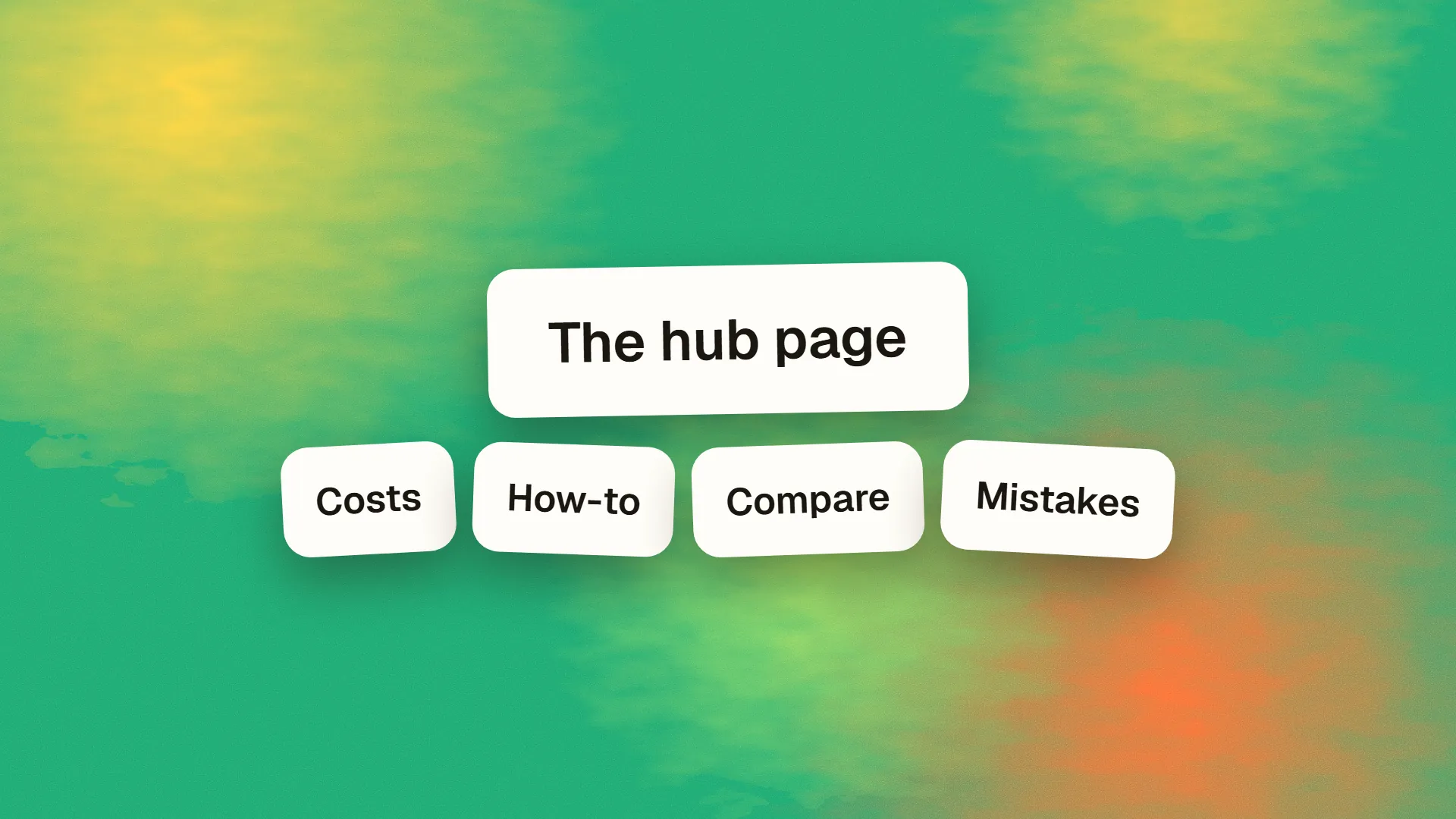
Structure. The pages link to each other in a way that expresses the subject's shape: a hub for the topic, spokes for its parts, cross-links between related parts. This is the topic cluster pattern, and it is how a crawler and a model learn that the site's pages form a body of work.
Depth and originality. Pages that add something: first-hand experience, data, specifics, positions. A site that restates what others say covers the topic without being an authority on it.
Consistency. The subject is the site's subject, or one of a few, sustained over time. A site that publishes on everything is an authority on nothing.
External confirmation. Links, mentions and citations from other sources in the field. Being cited by AI assistants both reflects and reinforces this.
Authorship. Named authors with demonstrable expertise, which feeds the E-E-A-T assessment at the page and site level.
Mapping the topic
Authority starts with knowing what the topic contains. For a chosen subject:
- List the questions. From keyword tools, People Also Ask, forums, customer conversations, support tickets and your own expertise. Aim for the full set, not the high-volume subset; the long tail is where coverage is demonstrated.
- Group them by intent into pages: definitional questions, how-to questions, comparisons, costs, problems, decisions. Each group with a distinct intent is a page.
- Identify the hub: the one broad page that introduces the subject and links to everything, and the sub-hubs for large sub-topics.
- Audit what exists. Which questions are already answered well, which are answered thinly, which are missing.
- Sequence the gaps by the value of the question and the effort of the answer.
The result is a map of fifty to a few hundred pages for a substantial topic, most of them modest in length, each answering one thing.
The programme
Publish the pages, each with a direct answer, real specifics and an author. Quality per page matters more than pace; a thin page in the cluster weakens it.
Link them deliberately. Every spoke links to the hub and to its neighbours; the hub links to every spoke; navigation and related-reading modules expose the structure. Orphan pages do not count toward authority because nothing tells the crawler they belong.
Keep them current. Update pages as the subject changes and date the updates. Authority decays with staleness.
Earn confirmation. Publish the pieces most likely to be cited, original data and definitive answers, and make them easy to reference.
Stay on subject. Resist publishing outside the topic for traffic; it dilutes the signal. If a second topic matters, build it as its own cluster.
Measure by the cluster. Impressions and rankings across the whole set of pages, and, tellingly, rankings for queries no page specifically targets, which is authority working.
How long it takes
Quarters. A cluster of thirty to fifty pages, published at a sustainable pace and interlinked, typically begins showing cluster-level effects, such as new pages ranking quickly and untargeted queries appearing, within six to twelve months on an established site, longer on a new domain. Sites that publish a hundred pages in a month do not shortcut this; they usually produce the thin, templated coverage that the scaled content policy targets. The pace is set by how fast genuinely good pages can be written.
Why it is the durable strategy
Individual rankings are volatile; authority is not. A site that owns a subject survives core updates better, ranks new pages faster, gets cited by AI assistants when they look for a source, and compounds: each page makes the next one more likely to rank. It is the closest thing SEO has to an asset. If you would like a topic mapped into the pages it would take to own it, book a call; the map usually fits on one sheet and takes a few weeks to fill.
Common questions
What is topical authority in SEO?
The standing a site earns as a comprehensive, reliable source on a specific subject, inferred by search engines and AI systems from how thoroughly it covers the topic's questions, how well its pages interlink, how original and expert the content is, and how often it is cited. A site with topical authority ranks for questions in the subject it has not specifically targeted.
How is topical authority different from domain authority?
Domain authority is a third-party score estimating a whole domain's link strength, which Google does not use. Topical authority is subject-specific standing built from coverage, structure, originality and citation within a topic. A site can be authoritative on one subject and irrelevant on another regardless of its domain authority score.
How many pages do you need for topical authority?
Enough to answer the subject's questions, which for a substantial topic is typically fifty to a few hundred pages, most of them modest in length and each answering one thing. The number follows from mapping the topic's questions rather than from a target; a niche subject may need twenty pages, a broad one several hundred.
How long does it take to build topical authority?
Usually six to twelve months on an established site for a cluster of thirty to fifty interlinked pages to show cluster-level effects, such as new pages ranking quickly and untargeted queries appearing, and longer on a new domain. Publishing a hundred pages in a month does not shortcut it and tends to produce the thin coverage Google penalises.
Does topical authority help with AI search?
Strongly. AI assistants choose sources that look like they know the subject: sites with deep, structured coverage, named experts and consistent citation. A site that has built topical authority is far more likely to be retrieved and cited for questions across its subject than a site with one page on it, however well that page ranks.