In short
The Agentic Commerce Protocol, from OpenAI and Stripe, is an open specification covering product feeds, checkout and delegated payment between AI assistants and merchants. The merchant stays the merchant of record. OpenAI launched it with Instant Checkout in September 2025, then in March 2026 was reported to be shifting towards retailers' own checkouts after weak uptake. Most merchants should focus on their product feed for now.
What ACP is
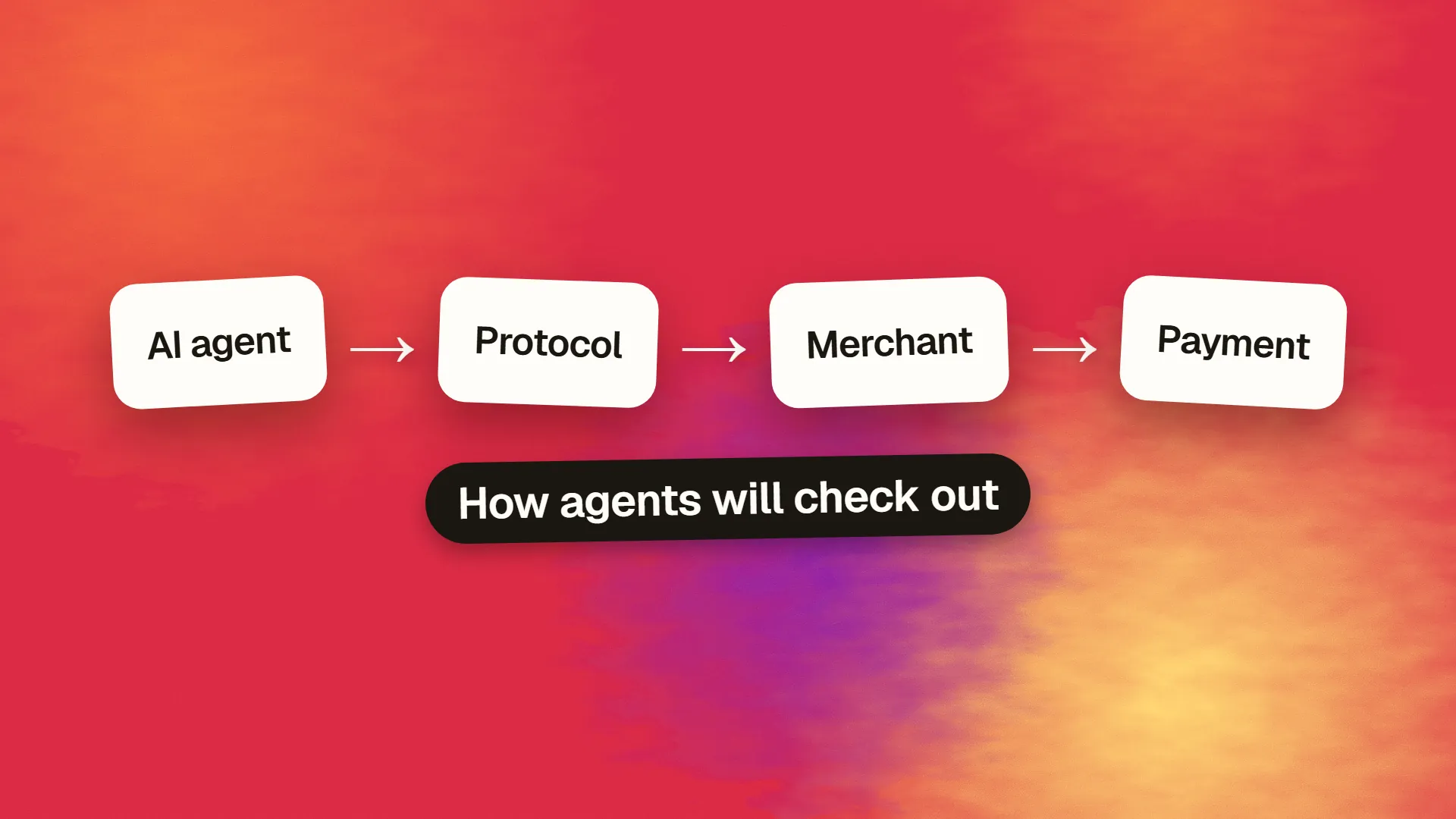
ACP is a set of open specifications that let an AI assistant work with a store: read its products, begin a checkout and pass payment details safely. It was co-developed by OpenAI and Stripe, and launched in September 2025. For the wider context, read what agentic commerce is.
OpenAI's commerce documentation lists the parts:
| Part | What it does |
|---|---|
| Product feeds | Keeps listings, prices and availability current, through an API or SFTP file upload |
| Products and promotions | Structured product data and offers |
| Agentic Checkout Spec | How the assistant and the merchant run the checkout |
| Delegated Payment Spec | How payment providers handle and secure agent-initiated transactions |
How a purchase is meant to work
- Discovery. A person asks for a product. The assistant uses merchants' product data, among other sources, to suggest options.
- Checkout begins. If the person wants to buy, the assistant opens a checkout session with the merchant, using the merchant's own rules on pricing, tax and delivery.
- Confirmation. The person reviews the order and confirms.
- Delegated payment. Payment details are shared through a provider in a restricted form, such as a token limited to that merchant and amount, so the assistant doesn't hold a usable card number.
- Fulfilment. The merchant accepts or declines the order, and takes care of delivery and customer service.
The important principle is that the merchant remains the merchant of record. Your payment processor, your tax handling and your customer relationship stay with you, in theory. Chargebacks and fraud responsibility also stay with you.
What happened to Instant Checkout
Here's the part that older explainers don't include. In March 2026, reports said that OpenAI was changing course, moving from native checkout inside ChatGPT towards retailers' own apps and checkout systems.
Reports gave several reasons:
- People researched, but rarely bought. Modern Retail's sources said the programme wasn't driving sales.
- Few merchants went live. Only a small number were reported to have integrated.
- Merchants wanted control. Reports on the shift pointed to merchants using their own checkouts.
Some details differ by source, and a few of the more dramatic figures come second-hand. But the direction is clear. Assistants seem to be stronger at discovery than at closing the sale, at least for now. That's a much more useful lesson for a merchant than the original launch headlines.
The protocol itself hasn't disappeared. OpenAI still publishes its specifications, and its docs now separate ads and checkout product data requirements. Check the current docs, as this is changing quickly.
ACP vs UCP vs AP2
There's more than one standard, and they don't all do the same job. A comparison from one implementer sets out the following:
- ACP: feed, checkout and delegated payment, from OpenAI and Stripe.
- UCP: Google's Universal Commerce Protocol, covering discovery and checkout, with a wider group of companies involved. Reports say that Stripe joined its Tech Council in April 2026 as well.
- AP2: focuses on proving who authorised a payment, and can work alongside the other two.
One developer write-up argues that choosing between them is the wrong question, and that most merchants will eventually reach both, through their platform or payment provider. Specifications are moving, so verify against the latest versions before you build.
| Standard | Focus |
|---|---|
| ACP, from OpenAI and Stripe | Feed, checkout and delegated payment |
| UCP, from Google | Discovery and checkout |
| AP2 | Proving who authorised a payment, alongside the others |
Should you implement it?
Most small and mid-sized stores: not directly. Wait for your e-commerce platform or payment provider to offer it. Commissioning a custom integration for a channel with uncertain sales is hard to justify, especially given what happened with Instant Checkout.
Large retailers with engineering teams: consider a pilot. You'll learn a lot from the data requirements, and your feed work will benefit other channels as well. Keep it small, and measure actual sales and margin.
Everybody: do the feed work. Discovery is where assistants are already influencing decisions. So make sure that:
- Titles and attributes are accurate and complete
- Prices and stock are current
- You use real product identifiers, such as GTINs
- Delivery and returns are clearly stated
- Structured data on product pages matches your feed
If you're on Shopify, also read how Shopify handles SEO, and check what its current sales channels offer.
Security considerations
Any system where software can spend money deserves a careful look:
- Validate all orders on the server, including prices and stock. Never trust what an agent says.
- Make checkout requests idempotent, because agents and networks retry.
- Review your fraud rules. Agent traffic looks a lot like bots, so tune protection deliberately.
- Think about prompt injection. A malicious page could influence an agent's choice. See how to stop prompt injection.
- Use the provider's tokens and never handle raw card details yourself.
What to watch next
Keep an eye on whether assistants start closing more sales, whether a single standard wins out, and whether fees appear. Reports said that OpenAI had planned a fee on ChatGPT checkouts, and any such fee would change the economics for merchants.
For now, treat agentic checkout as a channel to monitor, and clean product data as a job to do today. If you'd like help assessing your store, book a call.
Common questions
What does ACP stand for?
Agentic Commerce Protocol. It's an open set of specifications from OpenAI and Stripe that covers product feeds, checkout and delegated payment, so AI assistants can work with merchants. It's distinct from similarly named protocols, such as the Agent Communication Protocol.
Is ChatGPT Instant Checkout still available?
Reports from March 2026 said that OpenAI was moving away from native checkout towards retailers' own apps and checkouts. Availability may vary, so check OpenAI's current documentation before making plans that depend on it.
Do I need Stripe to use ACP?
Not necessarily. Stripe co-developed the protocol, but payment providers can implement the Delegated Payment Spec. Check the current spec and whether your provider supports it. Most merchants will depend on their platform or payment provider for this.
Is ACP worth implementing for a small store?
Probably not directly. Uptake has been limited, and your platform is likely to handle integration if the channel grows. Clean product data and accurate policies are a better investment, since they help with all forms of AI discovery.