In short
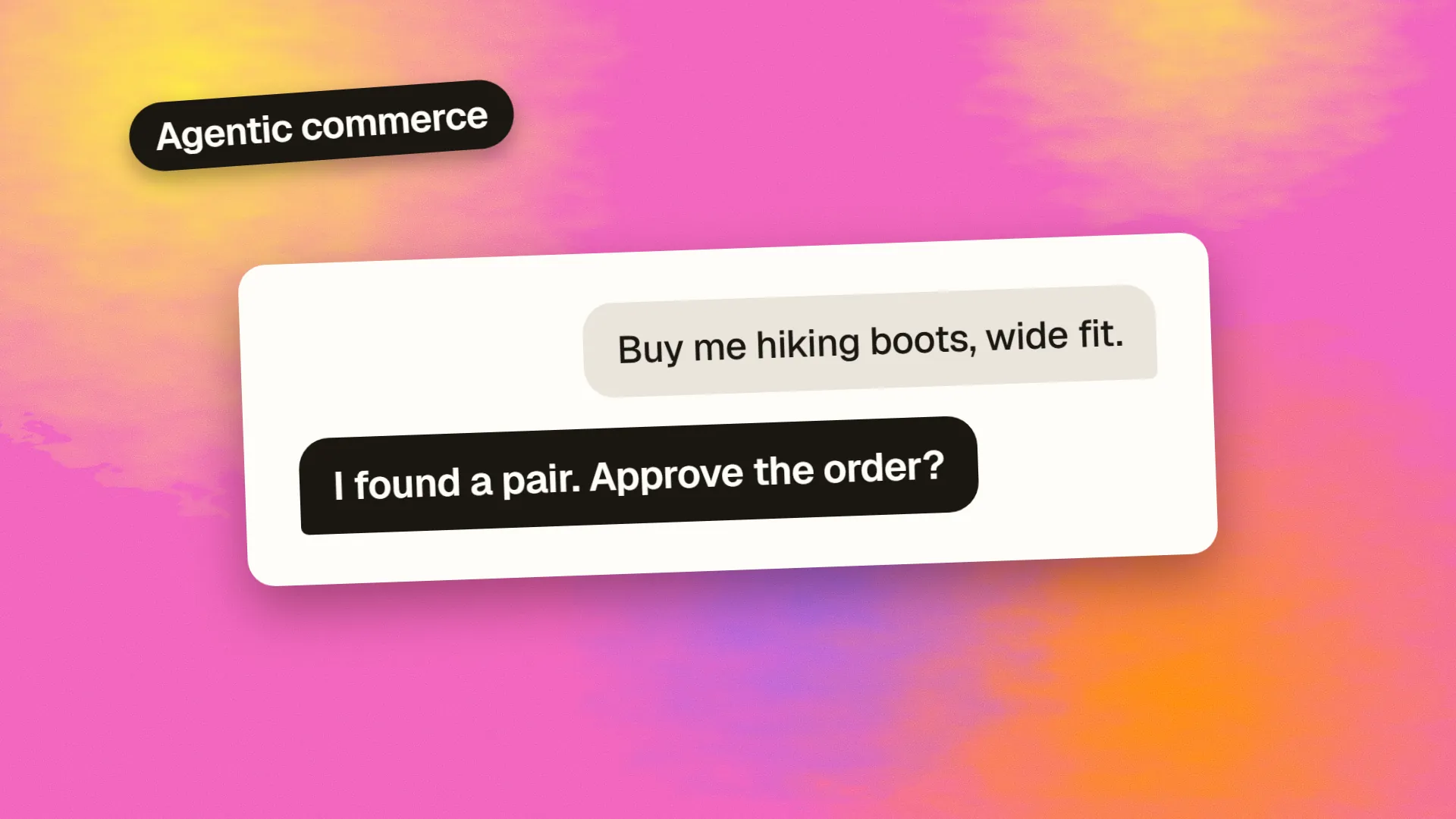
Agentic commerce is shopping carried out by AI agents on someone's behalf: they research, compare and sometimes pay. Protocols such as ACP, from OpenAI and Stripe, and Google's UCP aim to connect agents to merchants' catalogues and checkouts. The merchant generally remains the merchant of record, keeping responsibility for fraud and disputes. Most stores should start with clean product data and let their platform handle the integration.
What it means
In ordinary e-commerce, a person searches, browses, compares and pays. In agentic commerce, an AI system does some or all of that on their behalf. “Find me a waterproof jacket under $150 that ships by Friday” becomes a task, rather than an evening of tabs.
browses, compares
and pays
an agent researches and compares
and sometimes pays
There's a spectrum, and it helps to separate the stages:
| Stage | What the agent does | How common |
|---|---|---|
| Research | Compares products in an answer | Already widespread |
| Assisted checkout | Starts checkout; the person confirms | Early, with setbacks |
| Delegated purchase | Buys within limits set by the person | Early, and limited |
Most of the near-term business effect comes from the first stage. If an assistant can't understand your product data, you may never make its shortlist, even with no checkout integration at all.
The main protocols
Standards are appearing so that agents and stores don't need a custom integration for every pair. The picture is still shifting, and much of what's available comes from vendors, so check the specifications before you build anything.
- ACP (Agentic Commerce Protocol). Co-developed by OpenAI and Stripe, launched in September 2025 alongside Instant Checkout in ChatGPT. The seller stays the merchant of record. OpenAI has since changed course on checkout: in March 2026, it was reported to be moving purchases towards retailers' own apps and checkouts, after weak uptake. We explain this in depth in the Agentic Commerce Protocol explained.
- UCP (Universal Commerce Protocol). Google's protocol, reported as covering discovery as well as checkout, with a wider group of companies involved.
- AP2 (Agent Payments Protocol). A different layer, concerned with proving that a person really authorised an agent to pay.
Commentators commonly expect merchants to end up supporting more than one, usually through their e-commerce platform or payment provider, not by writing their own code.
What stays your responsibility
Letting an agent place the order doesn't hand over your obligations. Sources consistently report that the merchant remains responsible for fraud, chargebacks and disputes. Consumer law, returns and customer service all remain with you, too.
Some questions don't have settled answers yet. What happens when an agent orders the wrong size, because it misunderstood? Who's at fault when a prompt injection on a third-party page sends an agent to the wrong seller? Review your terms, and speak to your payment provider and legal adviser if this is becoming significant for you.
What changes for merchants
Product data becomes your storefront. An agent doesn't respond to a beautiful hero image. It reads titles, attributes, stock, prices, delivery times and return terms. Vague or missing data may well lose you the sale.
Comparison becomes tougher. When an assistant compares products in seconds, an unclear price or an inconsistent spec stands out. Accuracy is more important than clever copy.
Reviews and third-party mentions matter. Assistants draw on what others say about you. See how to get your brand cited by ChatGPT, Claude and Gemini.
Your relationship with the customer gets thinner. If the buying happens in someone else's interface, you may lose the chance to upsell, build your email list or use your own brand experience. It's a genuine trade-off. Weigh it up before enabling instant checkout, as you did when you considered marketplaces.
Analytics get harder. Purchases influenced by assistants may look like direct traffic, if you can see them at all. See how to track AI referral traffic.
What to do now
Everyone with a store:
- Clean your product feed. Use complete attributes, correct prices and stock, real identifiers such as GTINs, and clear variants.
- Add accurate product structured data on product pages, including price and availability.
- Publish your policies clearly. Delivery times, returns and warranties should be in plain text on the page.
- Check that agents can reach you, using our AI crawler list and how to make your website agent-ready.
- Ask your platform. Shopify, Stripe and others are working on these channels, so see what's already available for your account before building anything.
Larger retailers:
- Pilot one channel, on one product category.
- Review fraud rules, because agent traffic can look like bots, and overly strict protection may block genuine agent checkouts.
- Track margin and returns separately for this channel.
Very small shops: the first two or three steps are plenty for now. Don't commission a custom integration for a channel that may barely be sending you any sales.
How big is it really?
The clearest evidence so far is cautionary. Reports on OpenAI's change of plan said people researched products in ChatGPT but rarely bought there. Be careful with forecasts. Projected figures are often produced by companies selling something in this area, and “assistants influence” is very different from “assistants complete the purchase”. Plenty of shoppers still want to see the final price and click the button themselves, especially for anything expensive. Watch your own numbers, including your referral traffic and how customers say they found you.
If this does become a primary channel, the merchants with clean data will be ready. If it takes longer, clean data still improves your ordinary search, marketplaces and customer experience, which is why it's a low-risk place to start.
If you want help assessing your store's readiness, book a call.
Common questions
What is an example of agentic commerce?
An assistant researches products, compares options against your criteria and helps you complete the purchase. ChatGPT's Instant Checkout, launched in 2025 with the Agentic Commerce Protocol, is the best-known early attempt, although OpenAI has since shifted towards retailers' own checkouts.
Do I need to implement ACP or UCP myself?
Most small and medium stores shouldn't. Your e-commerce platform or payment provider is likely to offer these channels. Start with clean product data and policies, and only consider a custom integration if you have the volume to justify it.
Who is responsible if an AI agent buys the wrong thing?
Generally, the merchant still handles returns, disputes and fraud, as the merchant of record, while consumer protection laws continue to apply. Some edge cases aren't yet settled, so review your terms and take legal advice as this channel grows.
Will agentic commerce replace online stores?
Not soon, and probably not fully. Agents are likely to take over some routine purchases and research, but people will still want to browse, particularly for brand-led or expensive purchases. Prepare your data without abandoning your own store.