In short
Choose DeepSeek when cost matters most: V4 Pro lists at $0.66 input and $1.98 output per million tokens off-peak, and Flash is far less. Consider Kimi K3 when you need its higher reported capability, at about $3 input and $15 output. Independent rankings place K3 above DeepSeek V4 Pro, although DeepSeek is competitive on isolated coding tasks. Neither is practical to self-host at the top end for most companies.
The basics
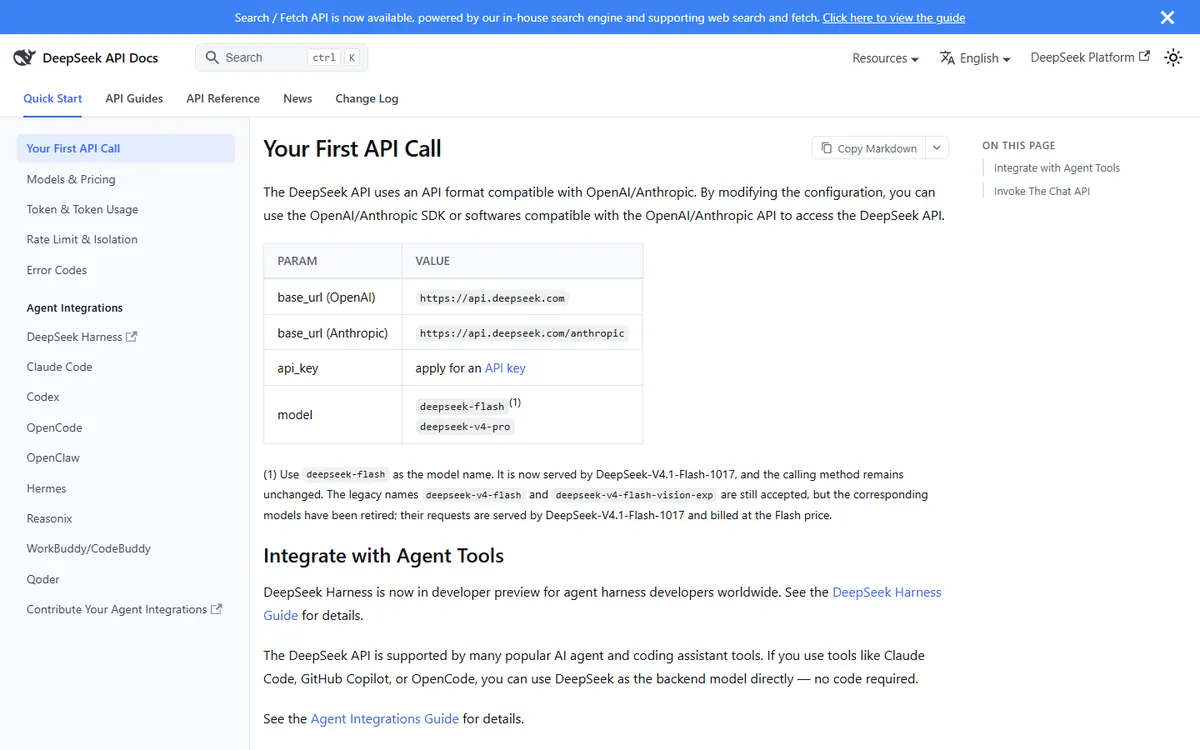
DeepSeek is known for efficient models at low prices. Its current API offers Flash and V4 Pro.
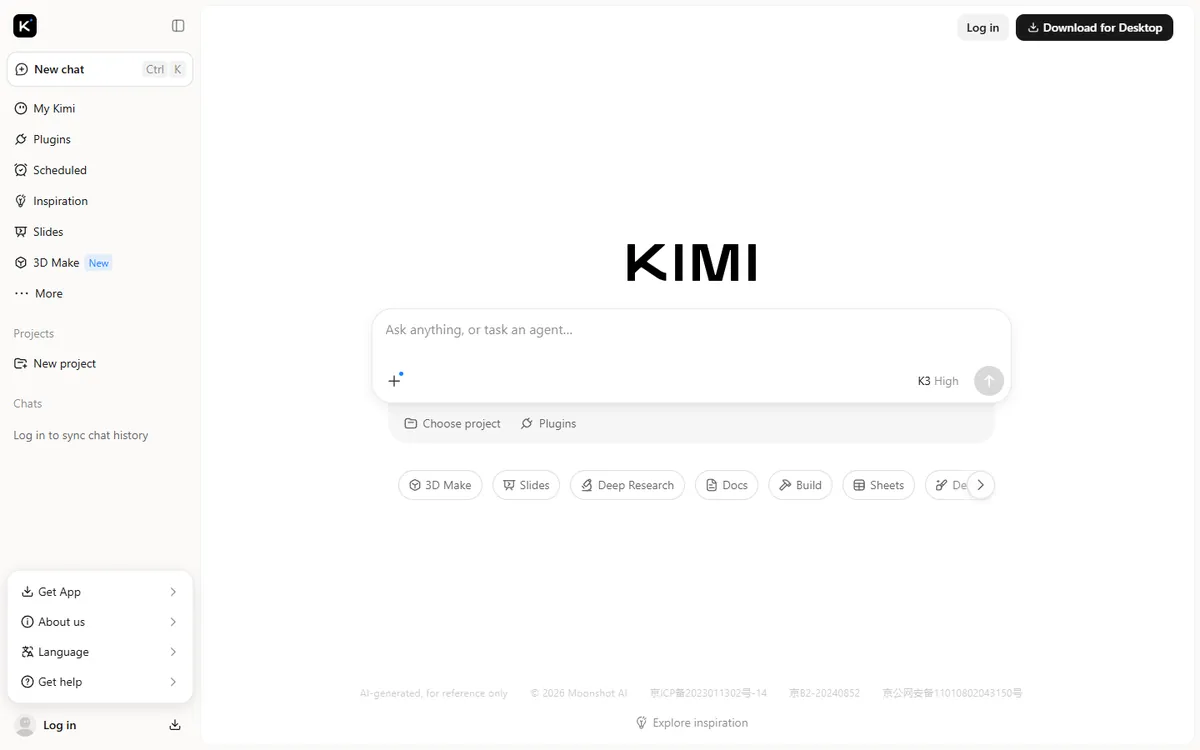
Kimi comes from Moonshot AI. Kimi K3 launched in July 2026, with weights published shortly afterwards, and a newer K3.1 Pro has followed. Moonshot is retiring its K2 models, so check that any older comparison isn't talking about those.
Prices
Per million tokens, checked on 4 November 2026. DeepSeek's come from its own page. Kimi's table didn't load for us, so the K3 price is from a third-party report. Confirm it before relying on it, particularly for K3.1 Pro.
| Model | Input | Cached input | Output |
|---|---|---|---|
| DeepSeek Flash (off-peak) | $0.15 | $0.003 | $0.60 |
| DeepSeek V4 Pro (off-peak) | $0.66 | $0.022 | $1.98 |
| DeepSeek V4 Pro (peak) | $1.32 | $0.044 | $3.96 |
| Kimi K3 (reported) | $3.00 | $0.30 | $15.00 |
For a workload of 10 million input and 2 million output tokens with no caching:
- DeepSeek Flash, off-peak: $2.70
- DeepSeek V4 Pro, off-peak: $10.56
- Kimi K3: $60.00
So, the gap is large. Kimi's batch pricing is 60% of standard for K3 models, and caching helps both. One reviewer also reports that K3 tends to use more output tokens per task, so compare cost per finished task, instead of the list price. See our LLM API pricing comparison.
Capability
Independent aggregate scores favour K3. A comparison published by DeepInfra cites the Artificial Analysis Intelligence Index at 57 for K3 and 44 for DeepSeek V4 Pro in its Max reasoning mode. It also notes that DeepSeek V4 Pro remains competitive on isolated coding tasks. These numbers are a snapshot, and benchmarks don't necessarily reflect your work.
Kimi K3 also offers native vision, and it has a context window of 1,048,576 tokens. DeepSeek lists 1M tokens of context as well, with vision on its Flash model.
The question is whether the difference matters for your tasks. For simple classification or extraction, you may never notice it, and you'd pay many times more for nothing. For hard reasoning, long agent work or difficult multi-step problems, a stronger model could save enough retries and human time to pay for itself.
“Open” doesn't mean you can run it
Both publish weights, but there's a big practical difference from being able to run them at home. K3 is reported to have 2.8 trillion total parameters, with 104 billion active per token, and Moonshot recommends supernode configurations with at least 64 accelerators. That isn't a workstation project. Large mixture-of-experts models require their whole size to be loaded, even though only part is active at a time.
For most companies, “open weights” means the option to use a third-party host or to fine-tune in a large setup, and insurance against a vendor changing its terms. If you actually need to run models on your own hardware, look at much smaller ones. See what hardware you need and self-hosting an LLM vs using an API.
Licences
Read these before you build a business around either one.
Kimi K3's weights ship under its own licence, not plain MIT. Reports say that internal use is permitted, but companies offering it as a service above a revenue threshold need a separate agreement, and very large products must show attribution.
DeepSeek's licences vary by model, so check the terms for the exact model you want. Licences also cover only the weights, not any service terms. See open-source or hosted models?
Data and compliance
Both are Chinese companies. Using their first-party APIs raises similar questions about where data is processed and what law applies. DeepSeek has also been restricted on government devices in several countries. So check your policies, contracts and any client requirements. A third-party host outside China may change where the data goes, but read its terms as well. Don't send customer data to any provider without checking. See is it safe to send customer data to an LLM?
How to choose
| You need | Start with |
|---|---|
| High-volume, simple tasks | DeepSeek Flash |
| Everyday coding on a budget | DeepSeek V4 Pro |
| Hard reasoning or long agent tasks | Test Kimi K3, and compare it with Western frontier models |
| Open-weight option at the top end | Kimi K3, through a host |
| Batch work with low urgency | Compare DeepSeek off-peak and Kimi batch pricing |
| Sensitive data | Neither first-party API, unless cleared by your rules |
How to test
- Pick 20 real tasks, including your hardest ones.
- Run them on both, using the same tool and prompt, through an OpenAI-compatible interface if possible.
- Measure success rate, retries, total tokens and total cost.
- Check how each behaves when it fails, as this matters more with agents.
Then consider using both, sending routine work to the cheaper model and hard tasks to the stronger one. This approach often saves more than choosing one model for everything. See also DeepSeek vs GLM and DeepSeek vs Qwen as you widen your comparison.
If you'd like help picking models for a product, book a call.
Common questions
Is Kimi K3 better than DeepSeek?
Independent aggregate scores place K3 above DeepSeek V4 Pro, although DeepSeek is competitive on isolated coding tasks and costs far less. Whether K3's advantage matters depends on your work, so test both with your own hardest tasks.
Is Kimi K3 open source?
Its weights are published, but under its own licence and not plain MIT. Reports say that internal use is permitted, and that large model-as-a-service providers need a separate agreement. Read the licence for your use case before you build on it.
Can I run Kimi K3 locally?
Not realistically for most people. It's reported to have 2.8 trillion parameters, and Moonshot recommends supernode configurations with at least 64 accelerators. For local use, look at much smaller open models, which can run on a good desktop.
Is DeepSeek cheaper than Kimi?
Yes, by a wide margin on list prices, based on current figures. DeepSeek V4 Pro lists at $0.66 input and $1.98 output off-peak, against a reported $3 and $15 for Kimi K3. Compare cost per finished task as well.