In short
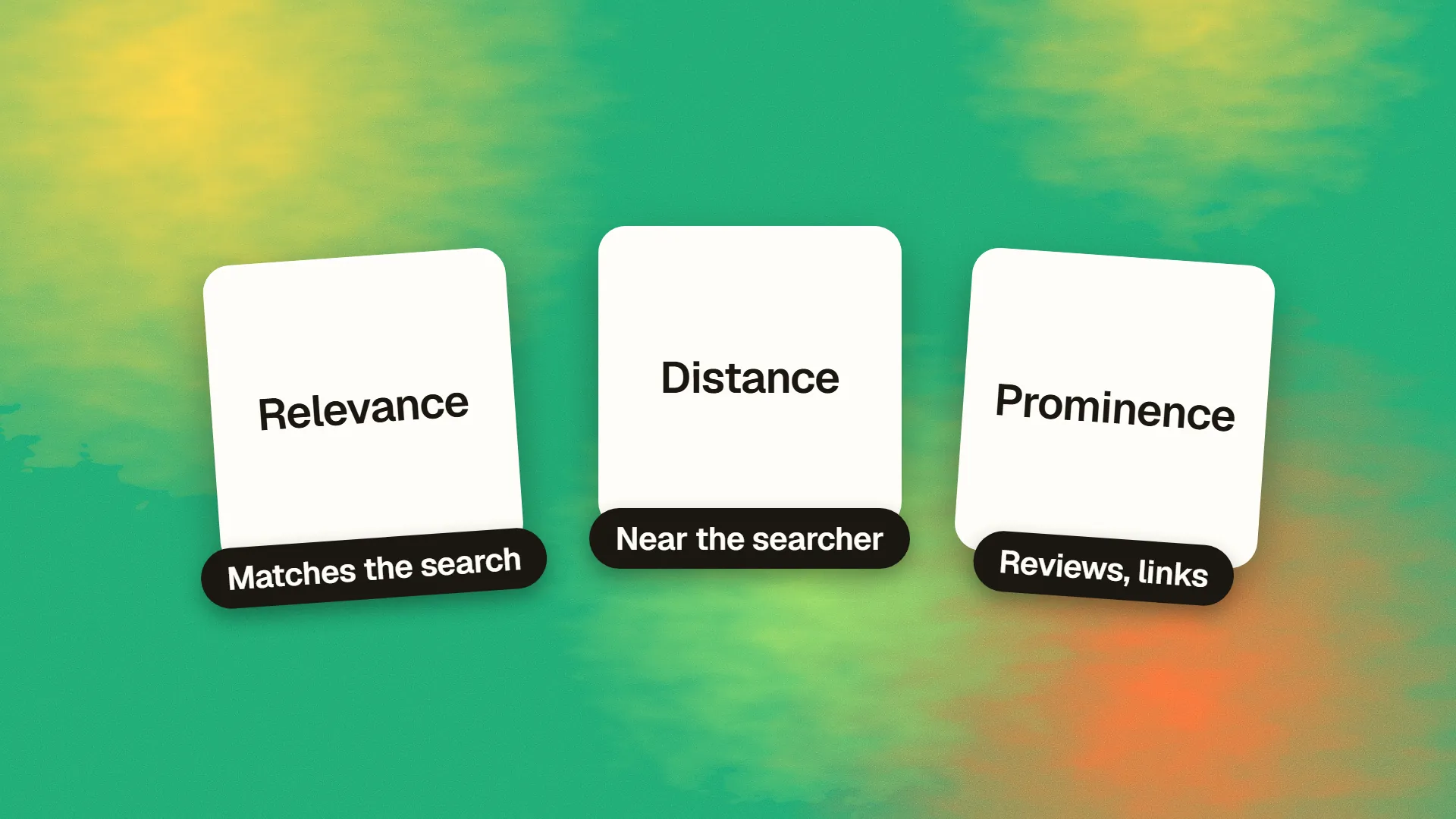
Google ranks map results on relevance (how well the listing matches the search), distance (from the searcher or the searched location), and prominence (how well known the business is, from reviews, citations, links and the website). To rank: claim and complete the Google Business Profile with the correct primary category, accurate name, address and hours, services and photos; earn a steady flow of genuine reviews and reply to them; keep name, address and phone consistent across the web; build a website with location and service pages that link to the profile; and never violate the naming and address guidelines, which leads to suspension.
What is being ranked
The map pack, the three listings with a map that appear for searches with local intent, and the results inside Google Maps itself, are drawn from Google Business Profiles rather than from web pages. Google's documentation names the three factors: relevance, distance and prominence. Everything below is a way of improving one of them.
Relevance: the profile
Relevance is how well the profile matches what was searched. It is decided almost entirely by the Business Profile, and most of it is setup done once and correctly.
Primary category. The single most important field. It should be the most specific category that describes the core business; "Italian restaurant" over "Restaurant", "Emergency plumber" over "Plumber" if that is the business. Secondary categories cover the rest.
Business name. The real name, exactly as it appears on signage and documents. Adding keywords or locations to the name is the most common violation of Google's guidelines and a frequent cause of suspension.
Services and products. Listed individually, with descriptions. These feed matching for specific searches.
Description, attributes and Q&A. Written for customers, mentioning what the business does and where, without stuffing.
Hours, including holiday hours, kept accurate. A profile marked open when the business is closed damages both rankings and reviews.
Photos, real and recent, of the premises, the team and the work. Profiles with photos receive more engagement, and engagement feeds prominence.
Posts, used occasionally for offers and updates, which keep the profile active.
Distance
Google ranks businesses near the searcher, or near the location in the query. For a business with premises, the address decides it, and there is nothing to optimise except accuracy. For service-area businesses without a public address, Google uses the service area set on the profile and the location of the searcher; ranking across a wide area is harder, and the website's location pages carry more of the work.
One implication: a business cannot rank in the map pack for a city it is not in or does not serve, and attempts to fake presence with virtual offices or keyword-stuffed names are the fastest route to suspension.
Prominence: reputation and the web
Prominence is how well known the business is, and it is where competition happens.
Reviews. Count, rating, recency, content and replies. Google says these factor into local ranking, and practitioner surveys consistently rank them among the top factors. Ask every customer at the moment of satisfaction, make it one tap, and reply to every review. Never gate, buy or fake.
Citations. Mentions of the business's name, address and phone number on directories, industry sites and local listings. Consistency matters more than volume: the same name, address format and number everywhere, so Google is confident it is one business. Clean up old listings with a former address or number.
Links. Links to the website from local and industry sites, the same way they count for organic search. A local newspaper, a chamber of commerce, a supplier, a sponsorship.
The website. The profile links to it, and its authority and relevance feed prominence. A site with a page for each service and each location, a clear address matching the profile, local business structured data and real content outranks a profile pointing at a one-page placeholder.
Engagement. Clicks, calls, direction requests and photo views from the profile signal that people want this business. Complete profiles with good photos and accurate information earn more of all of them.
The mistakes that get listings suspended
Keywords or locations in the business name. A PO box, virtual office or other address where the business does not actually operate. Multiple profiles for one location. Categories that do not describe the business. Fake or incentivised reviews. Each is against the guidelines, each is detected increasingly well, and a suspended profile can take weeks to reinstate, during which the business is absent from the map entirely.
A practical order of work
- Claim and verify the profile; correct the name, address, phone and primary category.
- Complete every field: hours, services, description, attributes, photos.
- Set up the website with a service page per service, a page per location if there are several, and consistent contact details; add local business structured data.
- Audit citations for consistency and fix the strays.
- Start asking every customer for a review, and reply to all of them.
- Earn a few local links.
- Post occasionally, keep photos and hours current, and check the profile monthly for user-suggested edits, which Google applies automatically if unchallenged.
Most of this is done once, and steps 5 and 7 are the ongoing work. For a single-location business it is the highest-return marketing effort available, and it is largely free. If your profile is set up and the business still does not appear where it should, book a call and we will look at which of the three factors is the constraint.
Common questions
What are the Google Maps ranking factors?
Google names three: relevance, how well the Business Profile matches the search; distance, from the searcher or the searched location; and prominence, how well known the business is, drawn from reviews, citations, links, the website and engagement with the profile. Improving map rankings means improving one of these.
How long does it take to rank on Google Maps?
A newly verified, fully completed profile with the right category can appear in map results within days for the business name and for low-competition local searches. Competing for busy categories in a dense area takes months of accumulating reviews, citations and website authority. Suspensions, which follow guideline violations, can remove a listing for weeks.
Why is my business not showing up on Google Maps?
Usually because the profile is unverified, incomplete, has the wrong primary category, or is suspended for a guideline violation such as keywords in the name or an address where the business does not operate. Distance also limits visibility: a business appears for searches near its address or within its set service area, not across a whole region.
Do I need a website to rank on Google Maps?
A profile can rank without one, but a website contributes to prominence and relevance: service and location pages, consistent contact details, local business structured data and inbound links all help the profile compete. In contested categories, the businesses in the top three almost always have a real site linked from the profile.
How do reviews affect Google Maps ranking?
Google states that review count and score factor into local ranking, and review recency, content and owner replies appear to help as well. A steady flow of genuine reviews from every customer, with replies, is the most effective ongoing work for map visibility. Buying, gating or faking reviews violates the guidelines and risks suspension.