In short
A discovery phase is a short, paid piece of work before a build, used to define goals, users, scope, risks and an estimate. You should finish it with concrete documents you own, and the freedom to take them elsewhere. It is worth paying for on new products or complex projects, where a wrong assumption is expensive. Skip or shrink it for simple, well-understood work such as a small marketing site.
What it is
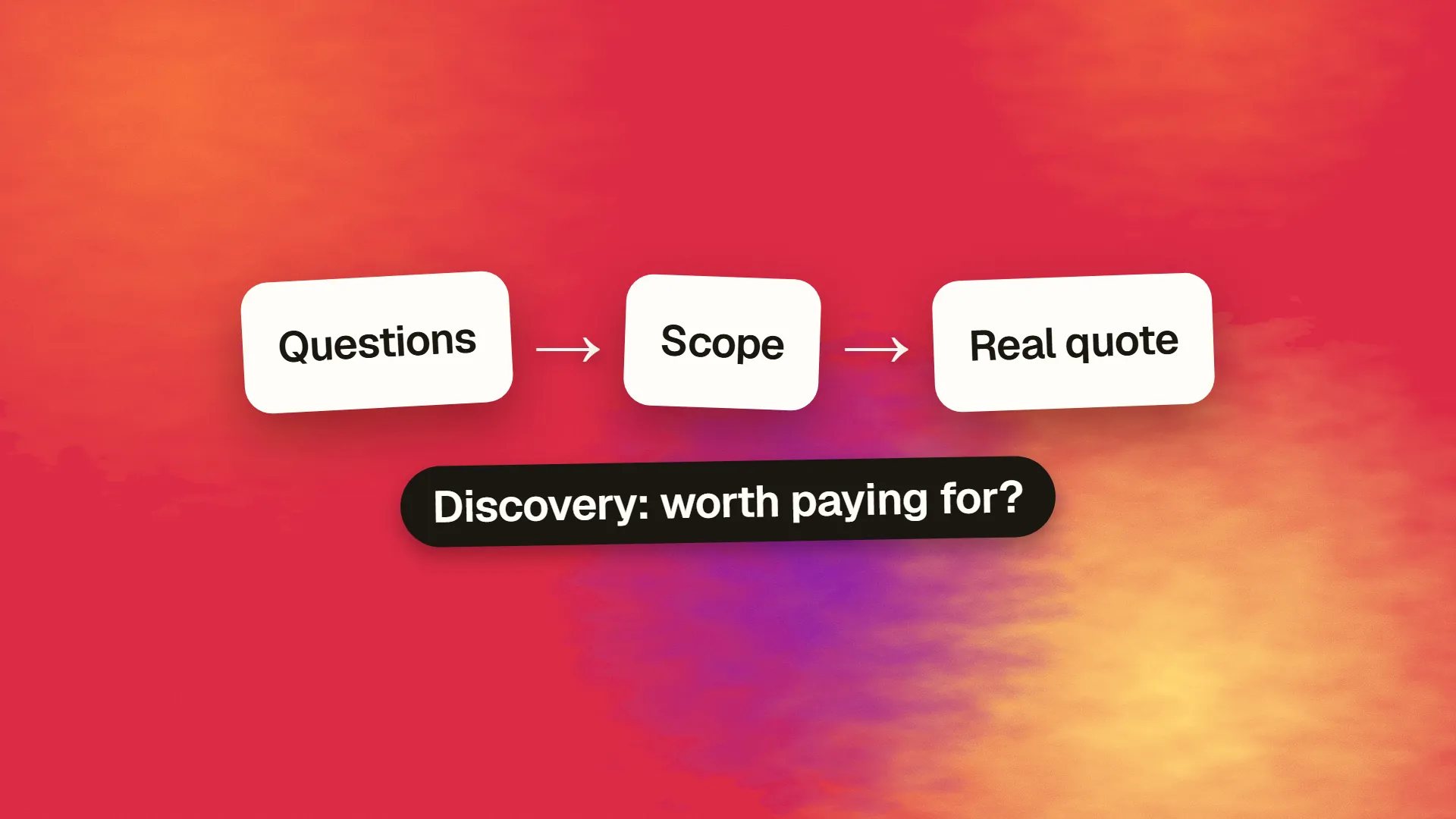
Discovery is the work done before design and development to decide what to build and how. It typically takes a few weeks, and you pay for it separately from the main project. How long product discovery should take covers the timing in more depth, and what is product discovery? explains the wider practice.
The aim is to replace assumptions with evidence, while changing your mind still costs very little. Moving a feature on paper takes minutes. Moving it after launch can take weeks.
What usually happens
- Stakeholder interviews. Finding out what the business needs, and where people in your own team disagree. See how to run a stakeholder interview.
- User research. Speaking to actual or potential customers about the problem. Our guide to user research questions explains how to avoid leading them.
- Competitor and market review. Finding out what people already use and what's missing.
- Technical investigation. Checking integrations, data, existing systems and constraints, because surprises tend to hide here.
- Scope and prioritisation. Deciding what goes in the first version and what waits.
- Prototype. For interactive products, a clickable prototype tested with a few people is often the most valuable output.
- Estimate and plan. A realistic budget and timeline, based on what you've learned.
What you should receive
Insist on tangible outputs, in formats that you own. A typical set includes:
| Deliverable | Why it matters |
|---|---|
| Problem and goals statement | Gives everyone the same definition of success |
| Research findings | Shows what you learned, and from whom |
| Prioritised scope | Separates version one from later ideas |
| User flows or prototype | Makes the product concrete before anyone builds it |
| Technical approach and risks | Prevents expensive surprises |
| Estimate and roadmap | Allows a sound go or no-go decision |
The real test is whether a different team could price and build from these documents. If not, what you've received is not really discovery; it's a sales process with an invoice attached.
When it is worth paying for
- You are building something new, where it isn't clear that people want it or how it should work.
- The project is large, so a wrong assumption can waste far more than discovery costs.
- Your stakeholders disagree. Discovery brings hidden conflicts out early, when resolving them is cheaper.
- You have complex integrations or legacy systems nobody fully understands.
- Quotes are wildly different. That usually means suppliers are guessing, because the scope is vague.
- You need to justify a budget internally. Evidence and a defined plan make approval easier.
When to skip or shrink it
- A small brochure site with a clear brief. A short kick-off workshop is enough.
- You already have research, a specification, or an existing product with usage data.
- A small, cheap test. If building a rough version costs little more than studying it, just build it. A no-code MVP or a vibe-coded prototype can now be a form of discovery in itself.
- The change is well understood, such as a routine redesign with a known purpose.
Discovery should be proportional. A two-week project doesn't need a month of analysis.
A large project
Stakeholders disagree
Quotes differ wildly
Research already exists
A cheap test would answer it
A routine change
Is a separate fee fair?
Yes, generally. It's skilled work, and it produces something of value even if the project never goes ahead. In fact, one good outcome is that you learn an idea isn't worth building, which saves far more than the fee.
Paid discovery also reduces your risk with a new supplier. You get to see how they think, how they communicate and how they handle disagreement, before you commit to a large contract. Treat it as a trial for both sides.
Some suppliers credit part of the fee against the main project. That's reasonable, but be careful that this doesn't quietly lock you in. Your contract should say that you own the outputs and can take them elsewhere. See what should be in a web contract.
Warning signs of a poor discovery
- The outcome is decided before it begins. If the answer is always “a large custom build”, it isn't discovery.
- No contact with real users. Asking only your own team is an exercise in confirming existing opinions.
- Slides without decisions. Personas and vision statements can look impressive while leaving every hard question open.
- No written scope or estimate at the end.
- You can't keep the deliverables, or can't use them with another supplier.
How to get the most from it
Give the team access to the right people, including those who actually do the work, and share what you already know, such as analytics, support tickets and failed attempts. Then be ready to hear something unwelcome. Discovery only pays off if a finding can actually change the plan.
Before you begin, write down the three decisions that you most need this work to inform. Those questions will keep everyone honest.
If you are weighing up a new product or a large redesign, book a call and we can talk through whether discovery makes sense for you.
Common questions
How long does a discovery phase take?
Often between one and six weeks, depending on the project's size and complexity. A small website may only need a workshop, while a new product with several integrations can take longer. Keep it in proportion to the risk.
How much should discovery cost?
There's no fixed rule. It depends on how many people are involved and for how long. A common approach is to compare it with the cost of being wrong: spend enough to reduce major risks, but not so much that it delays learning from real users.
What is the difference between discovery and a proposal?
A proposal describes how a supplier would approach your project, often based on limited information, and is typically free. Discovery is paid work that investigates the problem and produces evidence, a defined scope and a more reliable estimate.
Can I do discovery myself?
Partly, yes. You can interview customers, review competitors and write down your goals and scope. An outside team adds technical judgement and fresh eyes. For larger or riskier projects, that outside challenge is often where most of the value lies.