In short
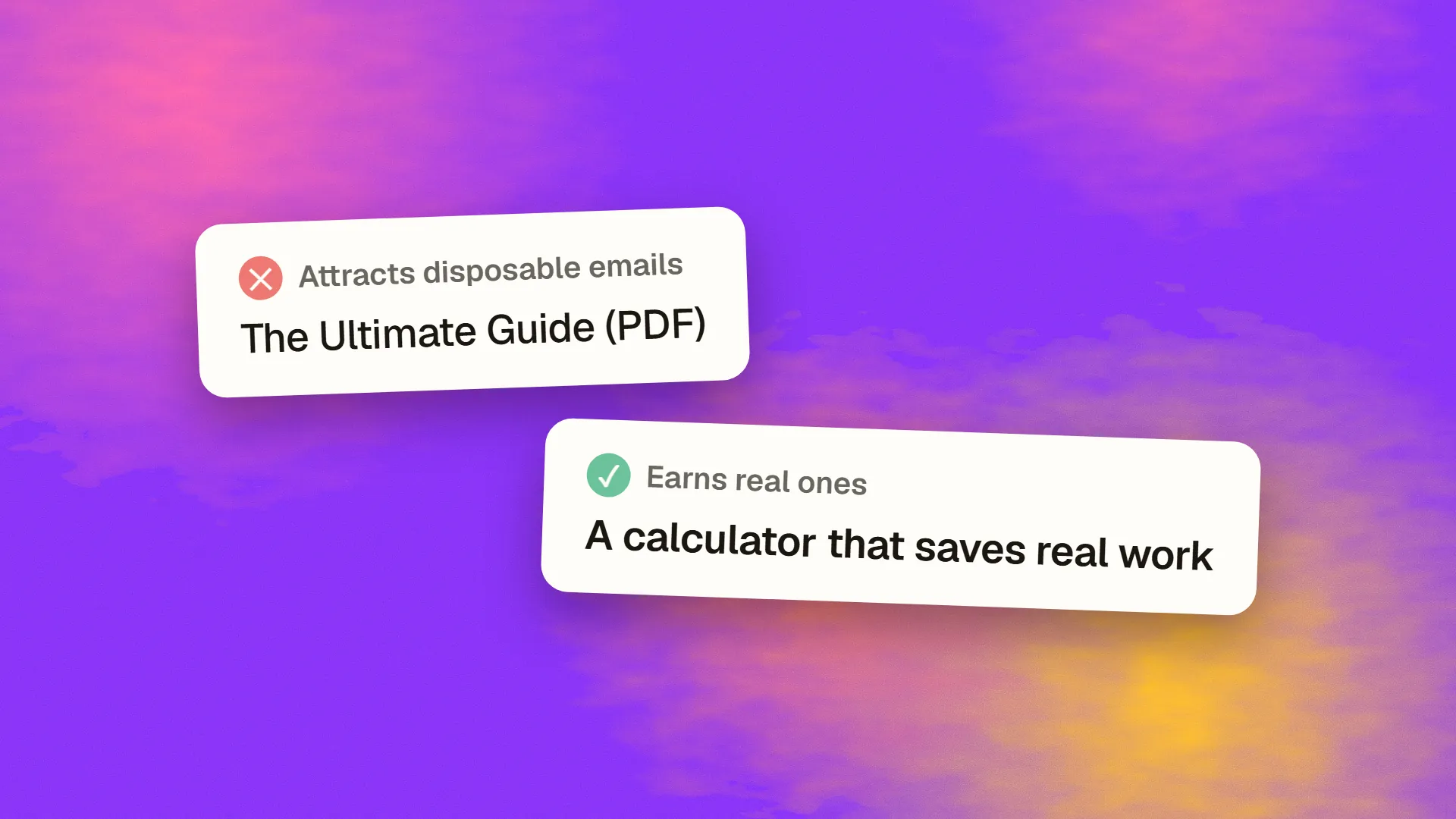
A lead magnet is a free resource, such as a template, calculator, report, checklist or short course, offered on a website in exchange for contact details, usually an email address, so that the business can continue the conversation. They still work, but the bar has risen: generic PDFs attract disposable addresses and little else, while specific, immediately useful items given to a well-defined audience still produce subscribers who read the follow-up. The value is realised in the sequence that comes after the download, not in the download itself.
What a lead magnet is
A lead magnet is an offer placed on a website: give us your email address and we will give you this. The this has traditionally been an ebook, a checklist, a webinar or a discount code. The purpose is to convert an anonymous visitor into a contact you can email, on the theory that most visitors are not ready to buy on the first visit and will forget you unless you have a way to return.
That theory is sound. The question is whether the trade still happens on honest terms, and the evidence of the last decade is that the standard version of the tactic has worn out.
Why the ebook era ended
Three things happened. Visitors learned that a gated PDF is usually a thin rewrite of the page they were already reading, followed by a sequence of sales emails. Disposable and alias addresses became easy: the visitor gets the file and the business gets a mailbox nobody checks. And spam filters and inbox tabs grew better at burying exactly the kind of automated sequence that lead magnets feed, a problem covered in why your emails go to spam.
The result is that a poorly chosen lead magnet can show a healthy conversion rate on the form while producing a list that opens nothing. The metric that matters is not downloads but the share of those contacts who open the second email, reply, or later enquire.
What still works
The formats that continue to earn real addresses share a property: the thing is more useful than the page that offers it, and it is useful right now.
- Tools and calculators. A pricing estimator, a savings calculator, a checker that runs against the visitor's own site. The result is personal and the address is the price of receiving it.
- Templates. A contract, a brief, a spreadsheet, a proposal structure. Something the visitor would otherwise build from scratch.
- Original data. A survey, a benchmark, an analysis nobody else has done. This is also the type most likely to earn links, which is a separate benefit.
- An audit or review. A short, real assessment of the visitor's situation, delivered by email. Labour-intensive, so it suits businesses where each lead is valuable.
- A short course by email. Five lessons over ten days. The format builds the habit of opening your emails, which is the point.
- A discount or trial for e-commerce and software, where the conversion is the purchase and the magnet is simply the incentive to come back.
A case study is not a lead magnet and should never be gated; it is consideration-stage content that should be as easy to reach as possible.
Templates
Original data
A short audit
A short course by email
Blog posts repackaged as an ebook
What happens after
The download is the beginning of the exchange. What decides whether the tactic paid is the sequence that follows, and the sequence that works looks less like a campaign and more like correspondence:
- Deliver the thing immediately, in the first email, with no extra step.
- Send one or two follow-ups that are also useful, related to the thing they took, and short.
- Make the offer once, clearly, and stop. An unsubscribe link is not a defeat; a contact who leaves was never going to buy.
- Move the survivors onto the regular newsletter, if there is one, and let it do the long-term work.
A seven-email sequence with escalating urgency is the pattern visitors have learned to recognise and the reason they give throwaway addresses. Sending less, and better, produces a smaller list that is worth more.
Where the magnet goes
Placement follows the marketing funnel. A lead magnet is a middle-of-funnel device: it belongs on and after awareness content, where the visitor has just learned something and is receptive to learning more. It does not belong on the contact page, where the visitor was about to give you far more than an email address, nor as a pop-up on arrival, before the visitor knows whether the site is worth an address at all.
The form itself should ask for the minimum. Email alone converts best; every additional field costs completions, and a phone field costs the most. The offer copy should describe the thing precisely, not sell it. Guidance on the button and surrounding text is in how to write a call to action.
When not to gate
Gating has a cost: the gated content earns no search traffic, no links and no citations, because it is not on the web. For content whose main job is to bring visitors in, that cost is usually larger than the value of the addresses. The rule of thumb is to gate things that are personal (results, audits), effortful to replicate (tools, templates, data) or serialised (courses), and to publish everything else openly. A business that gates its best explanatory content is hiding the pages that would have ranked.
If you want a second opinion on what your site should offer, and whether it should be gated, book a call.
Common questions
What is an example of a lead magnet?
A pricing calculator that emails the estimate, a downloadable proposal template, an original industry benchmark report, a five-lesson email course, or a first-order discount code. Each is offered in exchange for an email address.
Do lead magnets still work?
Yes, when the item is specific and immediately useful and the follow-up emails are short and honest. Generic ebooks and checklists mostly attract disposable addresses now. Judge success by how many contacts open the second email, not by downloads.
Should a lead magnet form ask for a phone number?
Not unless the offer is something like a personal audit where a call is the delivery method. A phone field reduces completions sharply and signals a sales sequence. Email alone converts best.
Should you gate a case study or white paper?
Case studies, no: they persuade prospects who are already comparing and should be frictionless. White papers only if they contain original data or analysis; a gated rewrite of public information earns neither addresses worth having nor search traffic.
How many follow-up emails should a lead magnet trigger?
Deliver the item immediately, follow with one or two related useful emails, make a single clear offer, then move contacts to the regular newsletter. Long escalating sequences are what trained visitors to use throwaway addresses.