In short
Most studies find that AI Overviews reduce clicks to regular results. Ahrefs found a 58% lower click-through rate for the top-ranking page on queries showing them, and Pew found that users clicked results less often when an AI summary appeared. Google argues that clicks are stable and of higher quality. The effect is largest on simple informational queries, so measure your own pages rather than relying on averages.
What the studies found
| Study | Method | Finding |
|---|---|---|
| Pew Research, 2025 | Browsing data from 900 US adults, March 2025 | Users were less likely to click results when a summary appeared; reported as 8% of visits vs 15% |
| Ahrefs, December 2025 data | About 300,000 keywords | 58% lower average CTR for the top-ranking page |
| Seer Interactive, 2024–2025 | 3,100+ queries | 61% drop in organic CTR, 68% drop in paid |
Other analyses point the same way, including an unreviewed randomised study reported to show more organic clicks when AI Overviews were hidden. A randomised test is stronger evidence in principle, but this one hadn't been through peer review.
Why the numbers differ
They measure different things. Pew studied real browsing behaviour among a panel of adults. Ahrefs and Seer analysed click-through rates by keyword. Their percentages can't be compared directly.
Correlation isn't proof. Ahrefs notes that its finding is a correlation. Google tends to show AI Overviews on certain kinds of query, such as informational ones, which may already have had lower click-through rates.
The queries differ. Studies that focus on informational queries will find larger effects than those with more commercial ones.
The timing differs. Ahrefs' figure rose from 34.5% in its earlier study to 58% in its update, and some data suggests click-through rates can recover over certain periods. These systems keep changing.
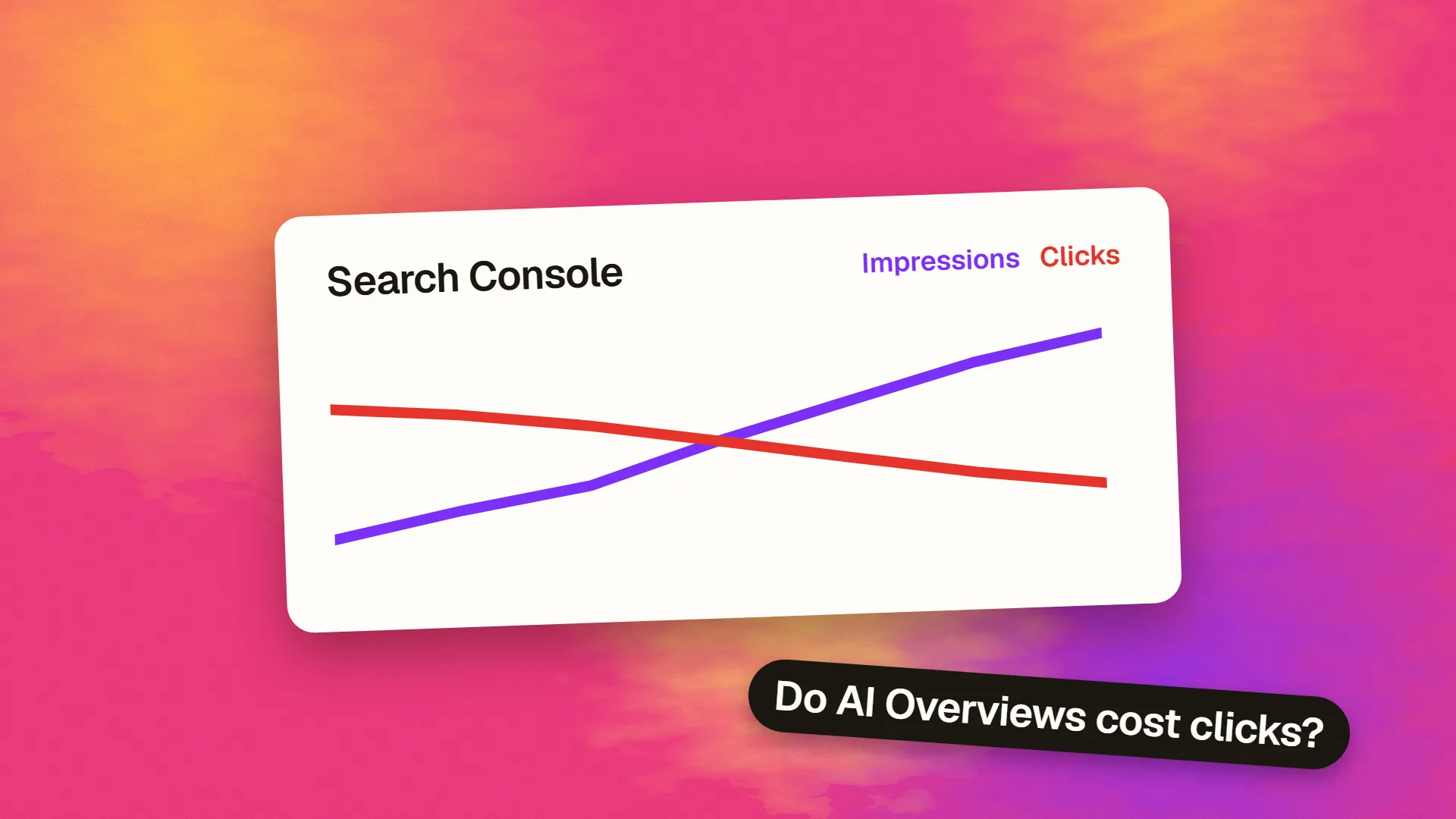
Falling CTR isn't the same as falling clicks. Rising impressions can reduce your CTR, while your total clicks stay steady. One analysis made exactly this point. AI Overviews may also be widening the range of queries that show your page, so check both numbers.
What Google says
Google's public position, as reported, is that organic clicks are relatively stable and of higher quality. Its guidance for site owners says that clicks from AI Overviews tend to be of higher quality, meaning that users are more likely to spend time on your site.
Google hasn't published the raw data that would let outsiders check this, and it has obvious commercial interests. Publishers and SEO companies have interests too. So test the claim against your own conversions.
It's also worth keeping in mind that Search Console reports AI features within the normal Web report, with no separate breakdown. So you can't isolate the effect directly.
Which queries suffer most?
From the pattern in these studies, and from how the feature works:
| Query type | Likely effect | Why |
|---|---|---|
| Simple facts and definitions | Largest | The answer satisfies the searcher |
| “How to” with simple steps | Large | A summary may be enough |
| Complex research | Moderate | People want depth, and may click for more |
| Comparison and evaluation | Mixed | Summaries help, but buyers often check sources |
| Brand and navigational | Small | People want a specific site |
| Local and transactional | Smaller | Someone needs to act, on a specific site |
Definition content has become much less valuable as a source of traffic. In our own data, broad “what is” pages have tended to rank far lower than specific how-to and troubleshooting pages, and that's the kind of evidence that you should gather for yourself.
How to measure your own exposure
- Export your top queries from Search Console, with a comparison to last year. See Search Console's numbers explained.
- Look for this pattern: stable or rising impressions, a steady position, and falling CTR.
- Check those queries by hand, to see which show AI Overviews, and whether you're cited.
- Segment by intent, separating informational, commercial and brand queries.
- Compare conversions, not just clicks. If clicks fall by 20% but enquiries hold steady, that's a very different problem from one where both fall.
A rank tracker that records AI Overview presence can do this at scale. Don't panic over one week's data, since seasonality and core updates can create similar patterns. See what to do after a traffic drop.
What to do about it
Shift towards questions a summary can't fully answer. Original research, tools, calculators, comparisons based on real testing, and first-hand experience all give people a reason to click.
Aim to be cited. It's not the same as a click, but it does build awareness. See how to appear in AI Overviews.
Build your brand. People who search for you by name aren't affected in the same way. See what brand search is.
Diversify. Email lists, communities, partnerships and direct relationships don't depend on one company's interface. See is a newsletter worth it?
Measure conversions from search. Fewer, better visits may be fine if they turn into customers.
Don't drop your information pages automatically. They can support your topical authority, and they earn citations and links even when clicks fall. But reconsider writing large numbers of new definition pages, if your goal is traffic. See zero-click search as the new baseline.
Don't block AI Overviews without thinking it through. Snippet controls affect normal search appearance as well, so test carefully.
The honest conclusion
Yes, AI Overviews reduce clicks on many queries, although the size of the effect is uncertain and varies. For any individual site, the only number that really matters is your own. Build a business that doesn't depend on someone clicking a result for a simple fact.
If you'd like help working out what's happening with your search traffic, book a call.
Common questions
Do AI Overviews reduce website traffic?
Most independent studies say they reduce clicks on affected queries, with Ahrefs reporting a 58% lower CTR for top-ranking pages. Total traffic depends on your mix of queries, and some sites see little change. Check your own Search Console data.
Does Google say AI Overviews reduce clicks?
Google's public position is that clicks are relatively stable and of higher quality. Independent researchers have generally found lower click-through rates. Google doesn't provide a separate AI Overview report in Search Console, so outsiders can't easily check this.
Which types of content are affected most?
Simple facts, definitions and short how-to answers tend to be hit hardest, because the summary can satisfy the searcher. Brand searches, local intent and in-depth comparisons tend to hold up better, although results vary between sites.
Should I block Google from using my content in AI Overviews?
Think carefully first. Controls like nosnippet also affect your normal search snippets, so you could lose visibility. Google-Extended doesn't affect AI Overviews. Most businesses are better off improving their pages and measuring conversions than opting out.