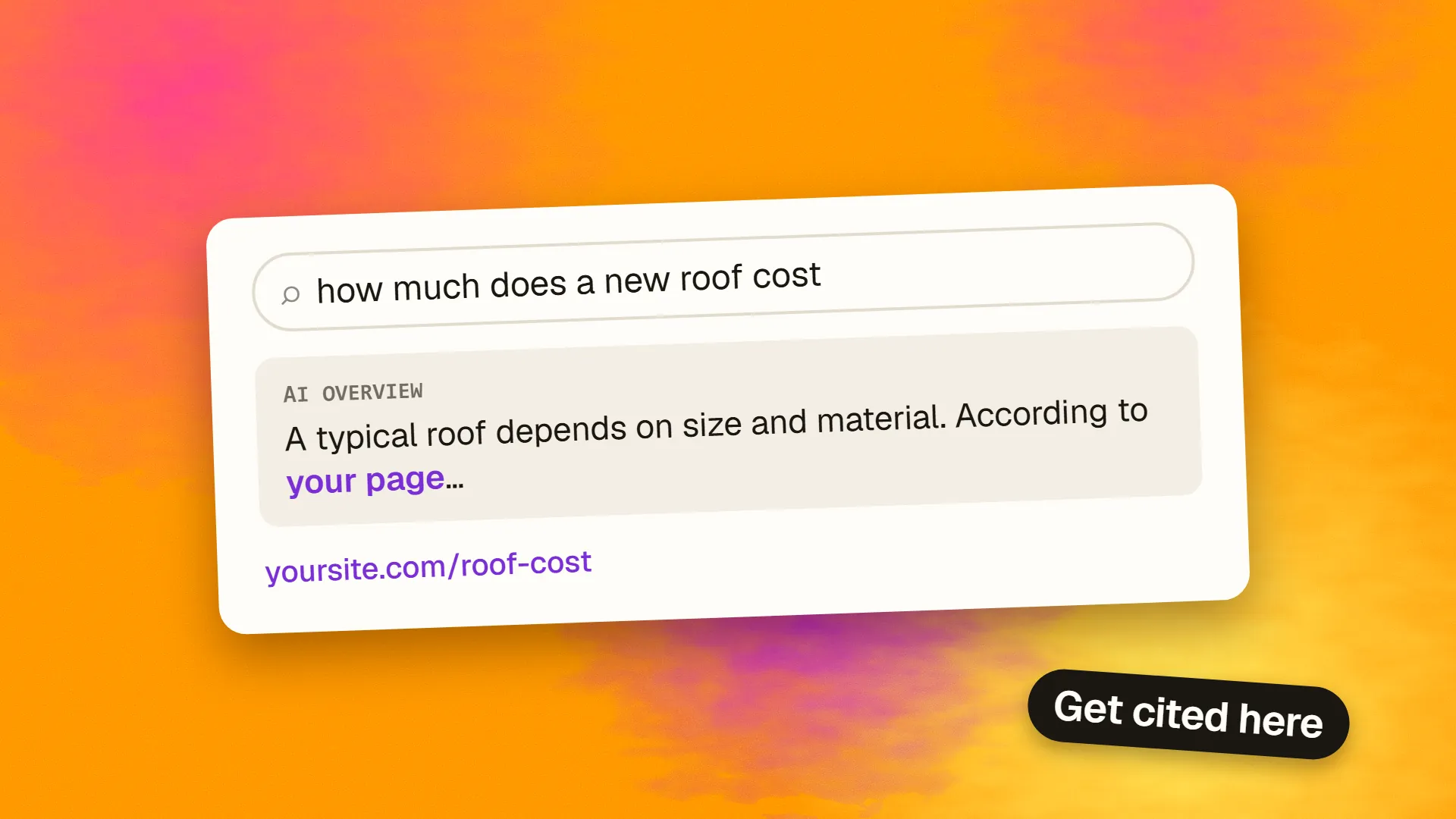
In short
Google says there are no extra requirements for AI Overviews or AI Mode: a page must be indexed and eligible to show with a snippet. No special schema or AI files are needed. To improve your odds, cover subtopics thoroughly, answer directly, keep key content in text, and strengthen your existing SEO. Google includes this traffic in Search Console's Web report, without a separate filter.
What Google says
Google's guidance on AI features is unusually direct:
- A page must be indexed and eligible to appear in Search with a snippet to be a supporting link. Google states, “There are no additional technical requirements.”
- There are “no additional requirements to appear in AI Overviews or AI Mode”. Standard SEO fundamentals still apply.
- You don't need new markup or special schema types. Structured data should still match the visible text.
- Both features may use query fan-out, running several related searches across subtopics, which can bring up a broader set of links than classic search.
- AI Overviews appear only when Google determines that they add value, so many queries don't show them.
Secondary reports on Google's May 2026 guidance also say that it treats AEO and GEO as still SEO, and that llms.txt won't help or hurt in Google Search. So you can stop looking for a secret checklist.
What you can skip
- Special “AI Overview schema”. It doesn't exist.
- llms.txt for Google's sake. See does llms.txt actually work?
- Rewriting everything into chunks. Google's guidance doesn't ask for this. Write for people, with clear structure.
- Buying AI Overview “placement”. Nobody can sell this reliably.
- Google-Extended changes. It doesn't affect inclusion in Search, so blocking or allowing it won't change your eligibility.
Check eligibility first
Before writing anything, confirm the basics on your important pages:
- Indexed? Use URL Inspection in Search Console. If a page isn't indexed, nothing else matters. See why pages get crawled but not indexed.
- Snippets allowed? A
nosnippettag, or a very lowmax-snippetvalue, can stop your content from being used. Check that you haven't set these by accident. - Crawlable? Check robots.txt, and that key content appears in the rendered HTML.
- Text, not images? Google specifically mentions keeping key content in text form.
Write for how AI Overviews work
Google's confirmation of query fan-out is the most practically useful detail. It means an answer is built from several searches on subtopics, so a page can be cited for one part of a question. See what query fan-out is.
Cover the subtopics a reader would want next. For “how much does a website redesign cost”, that means cost ranges, what drives cost, timelines and how to save money. One thorough page can be relevant to many of the searches involved.
Answer early and plainly. Start sections with a direct, self-contained answer, then add detail. This helps human readers first, and it makes extraction easier as well. See how to structure an article for featured snippets.
Use clear headings. Question-style headings where they fit, and tables for comparisons, make it easy to see what each section covers.
Add information others lack. Original data, specific numbers, real examples and first-hand experience give Google a reason to link to you, rather than repeating what ten other pages say. Google's helpful content guidance points the same way.
Show who wrote it. Author details and evidence of expertise matter, particularly on health, finance and other sensitive topics. See what E-E-A-T is.
Keep it current. Update facts, prices and dates when they change.
Strengthen your existing SEO. Reports on recent core updates suggest that brands and official sources are doing well, and Google says SEO is the foundation. Internal links, page experience and earning real mentions still count. See how to build internal links that move rankings.
Measure it
Google says that AI Overviews and AI Mode traffic is included in Search Console's Performance report under the Web search type. There's no separate filter that shows it clearly, so you have to work around that:
- Track your important queries by hand, or with a rank tracker that reports AI Overview presence, and note whether you're cited.
- Watch for rising impressions with falling clicks. That pattern often appears where AI Overviews have arrived. Our guide to Search Console's numbers can help.
- Look at conversions, not only clicks. Google claims that clicks from AI Overviews tend to be of higher quality. Check this using your own analytics rather than taking it on trust.
Be realistic about clicks
Appearing in an AI Overview doesn't guarantee traffic, and several studies report that they can reduce clicks on regular results. So think about what you want from search:
- For commercial and brand queries, being cited helps people to consider you, even if they don't click at once.
- For simple factual queries, the answer may satisfy the searcher, so don't build a business on them.
- For complex questions, people still tend to want depth, which is where a good page can win the click.
Consider also whether you want to limit how your content appears. Google provides nosnippet and max-snippet controls, although they also affect your normal snippets, so use them carefully. Blocking AI features entirely generally means giving up visibility in Search as well.
A short action plan
- Check indexing and snippets on your top 20 pages.
- Search your main questions in Google, and note which ones show AI Overviews, and who's cited.
- Read the cited pages. What do they cover that you don't?
- Improve your pages: direct answers, subtopics, original detail and current facts.
- Recheck monthly, and judge it by leads and sales.
If you'd like help working out where you stand, book a call.
Common questions
Do I need special schema for AI Overviews?
No. Google says you don't need new markup or special schema types. Structured data can still be useful in other ways, but it should match what's visible on the page, and it won't guarantee you a place in an AI Overview.
How do I know if my site appears in AI Overviews?
Search your important queries and check by hand, or use a rank tracker that reports them. Google includes this traffic in Search Console's Web report, with no separate filter, so you'll need to combine several sources.
Can I opt out of AI Overviews?
You can limit how your content is used with controls such as nosnippet and max-snippet, although these also affect your normal search snippets. Google-Extended doesn't affect Search. Consider the trade-off in visibility before limiting them.
Does ranking first guarantee appearing in an AI Overview?
No. Query fan-out means Google can draw on pages that rank for related searches, rather than only for your main query. Strong rankings help, but pages can be cited for narrower subtopics, and top results are sometimes left out.