In short
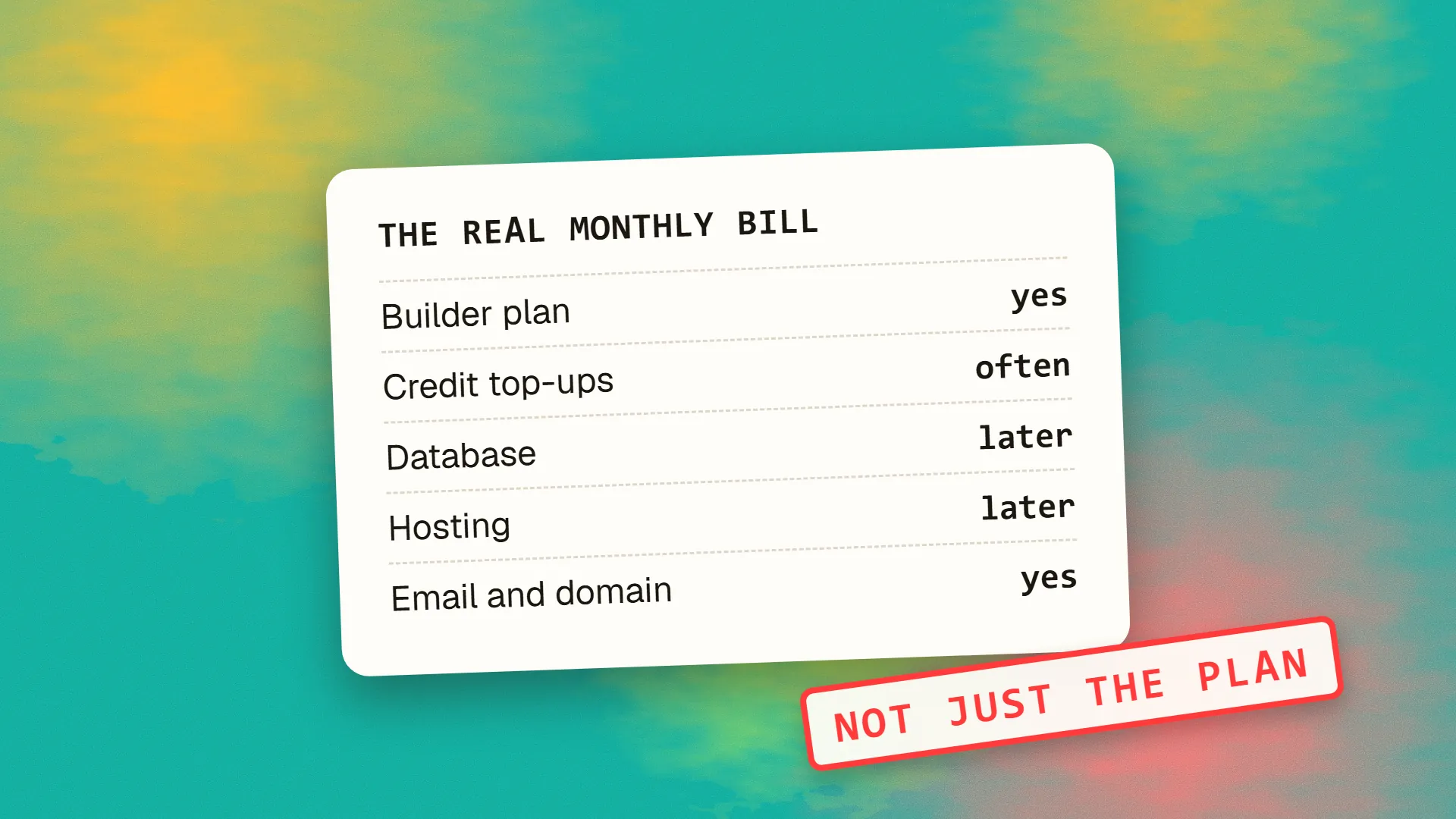
A hobby vibe coding project can run on free tiers for $0. A small live business app typically costs around $70–$100 a month in list prices: about $25 for a builder, $25 for a database and $20 for hosting, plus a domain and email. Heavy building or AI features in the app can push that far higher, because credits, top-ups and model usage are metered.
What you are actually paying for
Vibe coding costs fall into three buckets, and most articles only cover the first:
- Building: the AI tool you prompt, charged by subscription and credits.
- Running: hosting, database, storage, email and domain, charged whether you are building or not.
- Usage inside your app: any AI model or paid API your finished app calls, which grows with your users.
All prices below come from each vendor's pricing page on 4 November 2026, except where marked. They change often, so confirm before budgeting.
| Tool | Entry paid plan | How usage is limited |
|---|---|---|
| Lovable | Pro, reported at $25/month | Credits; top-ups available |
| Replit | Core, $20/month ($18 annually) | Effort-based; credits also cover published apps |
| Base44 | Starter, $16/month billed annually | Message and integration credits |
| Bolt | Pro, from $25/month | Starts at 10M tokens a month |
| Cursor | Plus, $8 introductory (Grok models only); Premium, $30 | Usage pool that refreshes weekly |
| Claude Code | Claude Pro, $20/month ($17 annually) | Plan usage limits |
| OpenAI Codex | Plus, $20/month; limited use on Free and Go | Five-hour and weekly limits |
Running costs tend to be simpler. Supabase is free up to 500 MB of database, though free projects pause after a week of inactivity; Pro starts at $25 a month. Vercel Hobby is free but for personal, non-commercial use only, so a business app needs Pro at $20 a month. Many builders can also host for you within their plan.
Three realistic budgets
Learning or a personal project: $0–$25 a month. Use free tiers. Expect to hit daily limits and to wait for them to reset. If you only build occasionally, pay for one month when you are actively working, then cancel. The free options are genuinely enough to find out whether you enjoy this.
A small live business app: around $70–$100 a month, plus a domain.
- Builder or coding tool: $20–$30
- Database (Supabase Pro): $25
- Hosting (Vercel Pro), if not included: $20
- Email sending, error tracking, analytics: free tiers at first
The important change from the hobby stage is that free tiers stop being appropriate: pausing databases and non-commercial hosting terms do not suit paying customers.
A serious build in active development: $150–$400 or more a month. Daily building burns through entry plans. Replit's Pro tier is $100 a month, and it lists higher tiers up to $2,000. Claude's Max plan starts at $100, and Codex Pro plans run from $100 to $500. You might also pay for two tools at once, which is common. This is the stage where comparing against a developer's time becomes fair: a few hundred dollars a month is cheap if it replaces hours of skilled work, but expensive if it is mostly generating and undoing the same features.
The costs that catch people out
Retry loops. Credit-based tools charge for attempts, not results. A bug that takes ten prompts costs ten prompts. Our guide to fixing a vibe-coded app explains how to spot this loop, and stopping it is the single largest saving most people can make.
Credits that expire. Lovable's page says unused monthly credits expire two months after issue, while top-ups last twelve months. Check the rule on any tool you use before buying a large allowance.
AI features inside your app. If your app calls a model for every user action, this bill grows with success and has no fixed ceiling. Run the numbers with a realistic number of users, and read how to control AI API costs before launch.
Hosting usage. Replit's monthly credits also cover published apps, storage and databases, so a busy app and heavy Agent use draw on the same pool. Supabase Pro bills beyond its allowance unless you keep the spend cap on, which is the default.
The production work. Security review, testing, backups and monitoring are not on any pricing page. Either you spend the time or you pay someone. Work through the security checklist to see how much is left. Our MVP cost guide gives planning ranges for custom work if you are comparing routes.
How to keep the bill down
- Plan before prompting. A written spec and a list of screens reduces expensive changes of direction.
- Ask for small changes. Broad requests use more credits and create more to fix.
- Use cheaper modes for simple work. Several tools offer lighter modes or models for small edits.
- Set hard limits on day one. Replit offers budget limits, Supabase has a spend cap, and every AI API should have a monthly ceiling.
- Pay monthly until you know your pattern. Annual discounts only help if your use is steady.
- Keep your exit open. Moving later can be the largest cost of all, as our comparison of which builders you can actually leave shows.
Is it cheaper than hiring a developer?
To get a first version, almost always. To run a real product long term, it depends on what you are building and who maintains it. Vibe coding moves costs around rather than removing them: less paid up front, and more risk, review and rework later. A sensible approach is to use it to validate the idea cheaply, then spend properly on whatever customers actually use.
If you have a working prototype and want to know what it would take to make it production-ready, book a call.
Common questions
Can you vibe code for free?
Yes, for learning and small personal projects. Most tools offer a free tier with daily or monthly limits, and Supabase and Vercel have free plans. Check the terms: Vercel Hobby is non-commercial, and free Supabase projects pause after a week of inactivity.
Why did my Lovable or Replit bill go up?
Usually because of top-ups or metered usage. Credit systems charge for attempts, so debugging loops are expensive, and Replit's credits also cover published apps, storage and databases. Check your usage page and set a budget limit.
How much should a small business budget for a vibe-coded app?
Plan on roughly $70–$100 a month in tooling and hosting once it is live, plus a domain, and more during active building. Add separate budget for a security review and any AI usage inside the app.
Is a subscription cheaper than paying for API usage?
For heavy, regular coding it often is, since plans include a usage allowance. For light or occasional use, pay-as-you-go can be cheaper. Compare using a typical month of your own work, because limits and rates change frequently.