In short
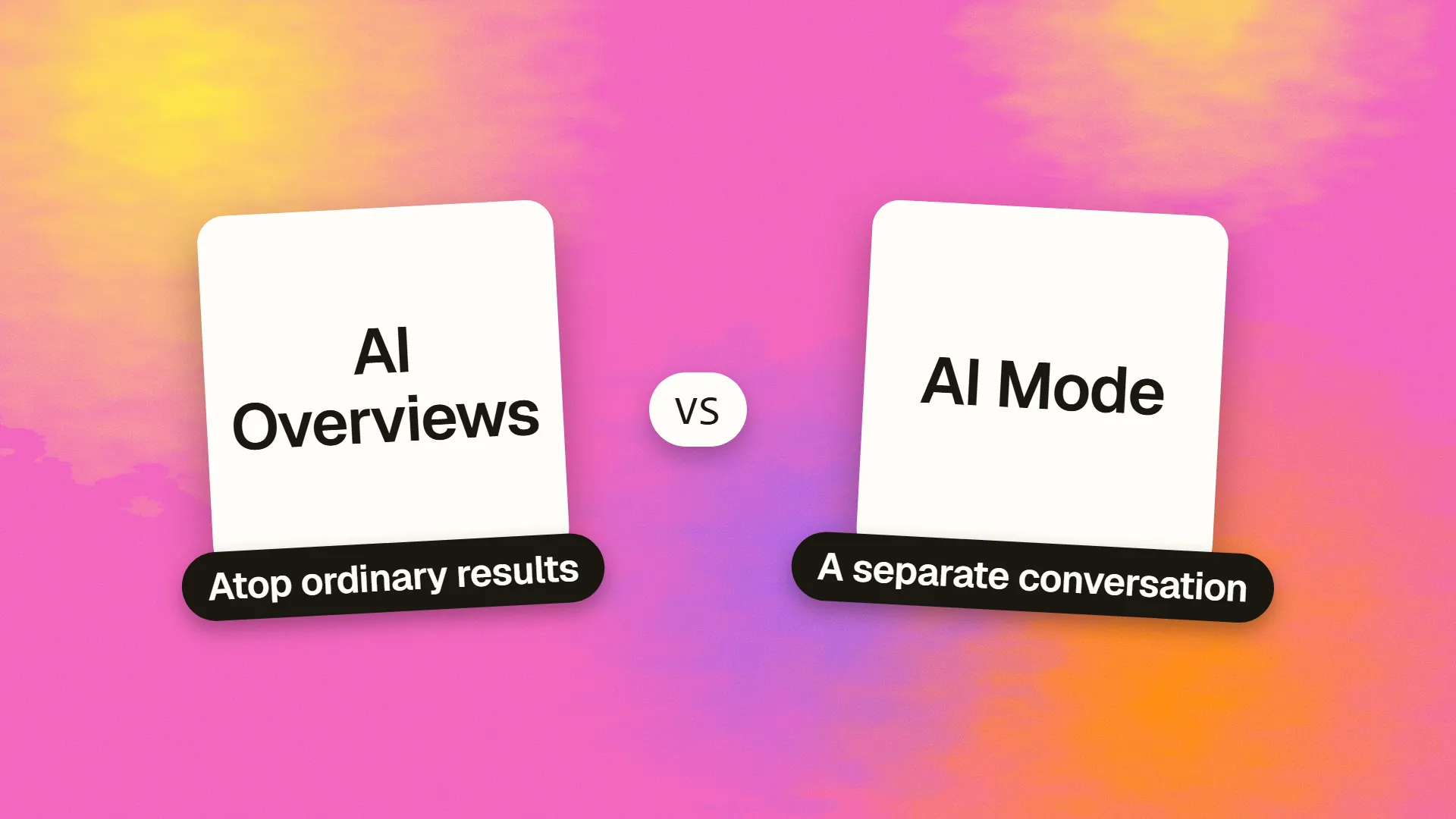
AI Overviews, rolled out from 2024, are generated summaries shown at the top of ordinary Google results for many informational queries, with cited sources, above the usual links. AI Mode, launched in 2025, is a separate conversational tab that answers questions in full with follow-up capability, performing many searches behind one question and citing sources inline, without a conventional results list. Both draw from Google's index and favour pages that answer specific questions directly and credibly. Overviews reduce clicks on affected queries; AI Mode reduces them further. Visibility in both depends on being the clearest, most authoritative source on a specific question.
AI Overviews
An AI Overview is a paragraph or two generated by Google's models, shown at the top of the standard results page, summarising an answer to the query with a set of cited links, typically three to six, drawn from the pages the summary used. Below it, the usual ten results, People Also Ask and other features continue. Google began rolling them out broadly in May 2024 and has expanded the queries that trigger them since, mostly informational and complex questions rather than navigational or purely transactional ones.
The Overview is an addition to the page. The searcher can read it and stop, click a citation, or scroll past to the results.
AI Mode
AI Mode, launched in the United States in 2025 and expanding, is a different surface: a tab or mode in which the searcher asks a question in natural language and receives a full conversational answer, with the ability to ask follow-ups that build on the conversation. There is no list of ten results; sources are cited inline and in a panel, and the answer may include tables, comparisons, maps and other structured elements assembled for the question.
Behind a single AI Mode question, Google runs what it calls query fan-out: the question is decomposed into many sub-queries, each searched across the index, and the results are synthesised. A question about the best approach to a project may trigger searches about costs, timelines, alternatives and pitfalls, drawing on dozens of pages, of which a handful are cited.
| AI Overviews | AI Mode | |
|---|---|---|
| Where | At the top of ordinary results | A separate conversational tab |
| Form | A paragraph or two | A full answer, with follow-ups |
| Behind it | One query | Many searches, fanned out |
| The usual links | Still below | Not the main view |
Where the citations come from
Both features retrieve from Google's ordinary index and select passages that answer the question or a sub-question directly. The cited pages tend to be ones that already rank well for the relevant queries, that state a specific answer in a self-contained passage, that carry the authority signals Google's E-E-A-T assessment looks for, and that are recent where recency matters. AI Mode's fan-out means a page can be cited for a sub-question it answers well even if it would not rank for the original question, which rewards specific pages over broad ones.
The mechanics are the same ones that decide how AI assistants choose sources generally; Google's advantage is the size and freshness of its index.
What they do to clicks
Studies through 2025 found organic click-through on queries showing an AI Overview fell substantially, with estimates of a third or more for the top positions, as searchers took the answer from the summary. Pages cited in the Overview recover some traffic; uncited pages bear the loss. AI Mode, with no results list at all, reduces clicks further on the queries where it is used, though its adoption is still growing and its effect on total traffic depends on how many searchers switch to it.
The zero-click trend was under way before both features; they accelerate it for informational queries and leave commercial, local and navigational queries less affected, since those still require a visit to act.
Which queries trigger each
AI Overviews appear most for informational questions, how-to queries, comparisons, definitions and complex multi-part queries, and least for brand searches, shopping queries with clear transactional intent, and topics Google treats cautiously such as health and finance, where they appear with more restraint. AI Mode is opt-in, so it appears for whatever the searcher brings to it, with a bias toward the longer, more exploratory questions that suit conversation.
Being visible in both
Answer specific questions specifically. A page, or a section under a question-phrased heading, with the direct answer in the first sentences, is the unit both features extract. Broad pages that circle a topic are used less.
Cover the sub-questions. AI Mode's fan-out cites pages that answer the components of a question. A cluster of pages covering a subject's sub-questions is cited more often than one long page.
Carry credibility signals. Named authors, dates, sources, an organisation behind the page, and the site's standing on the subject.
Be fetchable and structured. Content in HTML, clear headings, structured data where it applies.
Provide what an answer cannot. Original data, tools, first-hand experience and depth that a summary points toward rather than replaces. The pages that gain traffic from AI features are the ones the summary is a trailer for.
Measure differently. Impressions in Search Console rise while clicks fall on affected queries; brand searches and direct traffic reflect being named. The AI referral measurement problem applies here as everywhere.
The direction
Google has said AI Mode's capabilities will fold into the main search experience over time. The reasonable planning assumption is that a growing share of searches will be answered rather than listed, that being cited will matter more than being ranked, and that the content which earns citations is the content that would have ranked first anyway, written to be quoted. If you would like a site assessed for how it appears in Overviews and AI Mode for its key questions, book a call.
Common questions
What is the difference between AI Overviews and AI Mode?
AI Overviews are generated summaries with citations shown above the normal results on the standard results page. AI Mode is a separate conversational experience that answers a question in full, supports follow-ups, runs many searches behind one question, and cites sources inline without a conventional results list. Both draw on Google's index and favour the same kinds of pages.
How does Google choose sources for AI Overviews?
From pages in its index that rank well for the query or its sub-questions and contain passages that answer directly, with the credibility signals of authorship, organisation and site standing, and recency where it matters. Pages with a clear, self-contained answer under a heading matching the question are the ones most often cited.
Do AI Overviews reduce website traffic?
On the queries where they appear, yes: studies through 2025 found organic click-through for top positions fell by a third or more, as searchers took the answer from the summary. Pages cited in the Overview recover part of the traffic. Commercial, local and navigational queries, which still require a visit, are much less affected.
What is query fan-out in AI Mode?
The process by which AI Mode decomposes one question into many sub-queries, searches each across Google's index, and synthesises the results into a single answer with citations. It means a page can be cited for answering a component of a question well even if it would not rank for the full question, which rewards specific, well-structured pages.
How do I get my website cited in Google AI Mode?
Publish pages that answer specific questions directly in their first sentences under question-phrased headings, cover a subject's sub-questions across a cluster of pages, carry named authors, dates and sources, serve content in HTML with clear structure, and build the site's authority on the subject. The same qualities that earn AI Overview citations and top rankings earn AI Mode citations.